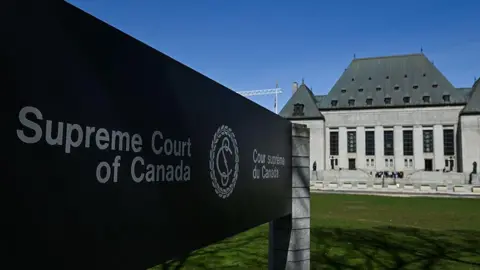
WASHINGTON (AP) — The Supreme Court is currently deliberating the future of a controversial immigration policy from the Trump era, known as metering, which has been used to limit the number of migrants seeking asylum at the U.S.-Mexico border.
During the hearings, several conservative justices appeared open to the arguments from the Justice Department seeking to overturn a previous court ruling that deemed the policy illegal. Advocates have criticized this practice, claiming it leads to a humanitarian crisis, forcing asylum seekers to wait in makeshift camps in Mexico.
While the current administrative stance is against the metering policy, the argument presented by the Justice Department claims it remains a 'critical tool' that could be deployed in the future if necessary. However, the court grapples with whether this may prevent asylum seekers who entered illegally from applying while new arrivals are blocked.
Justice Brett Kavanaugh notably questioned why Congress would prioritize individuals entering the U.S. illegally, emphasizing concerns over the policy's implications. Meanwhile, the government's attorney asserted that individuals turned away at the border could return later, likening it to a scenario where a port is at full capacity.
Historically, under the law, migrants who reach the United States can apply for asylum if they fear persecution in their home country. However, the ongoing legal challenges have brought into question the precise meaning of 'arrive in,' with immigration advocates arguing that it should apply to those at ports of entry.
Additionally, during the hearings, Chief Justice John Roberts posed questions regarding the physical presence required for claiming asylum, with Justice Ketanji Brown Jackson highlighting the difficulty of addressing hypothetical scenarios when there is no existing enforcement of the policy.
Metering was first introduced during President Barack Obama’s administration in response to a surge of Haitians arriving in San Diego and later expanded during Trump's presidency. The practice effectively ended in 2020 due to the COVID-19 pandemic, leading to stricter restrictions on asylum applications.
Post the Biden administration's reassessment, a federal judge ruled that the metering policy infringed upon migrants' constitutional rights and ignored legal requirements related to asylum screenings.
This ongoing case raises vital questions about the future of U.S. asylum policies and how they balance enforcement with humanitarian principles.