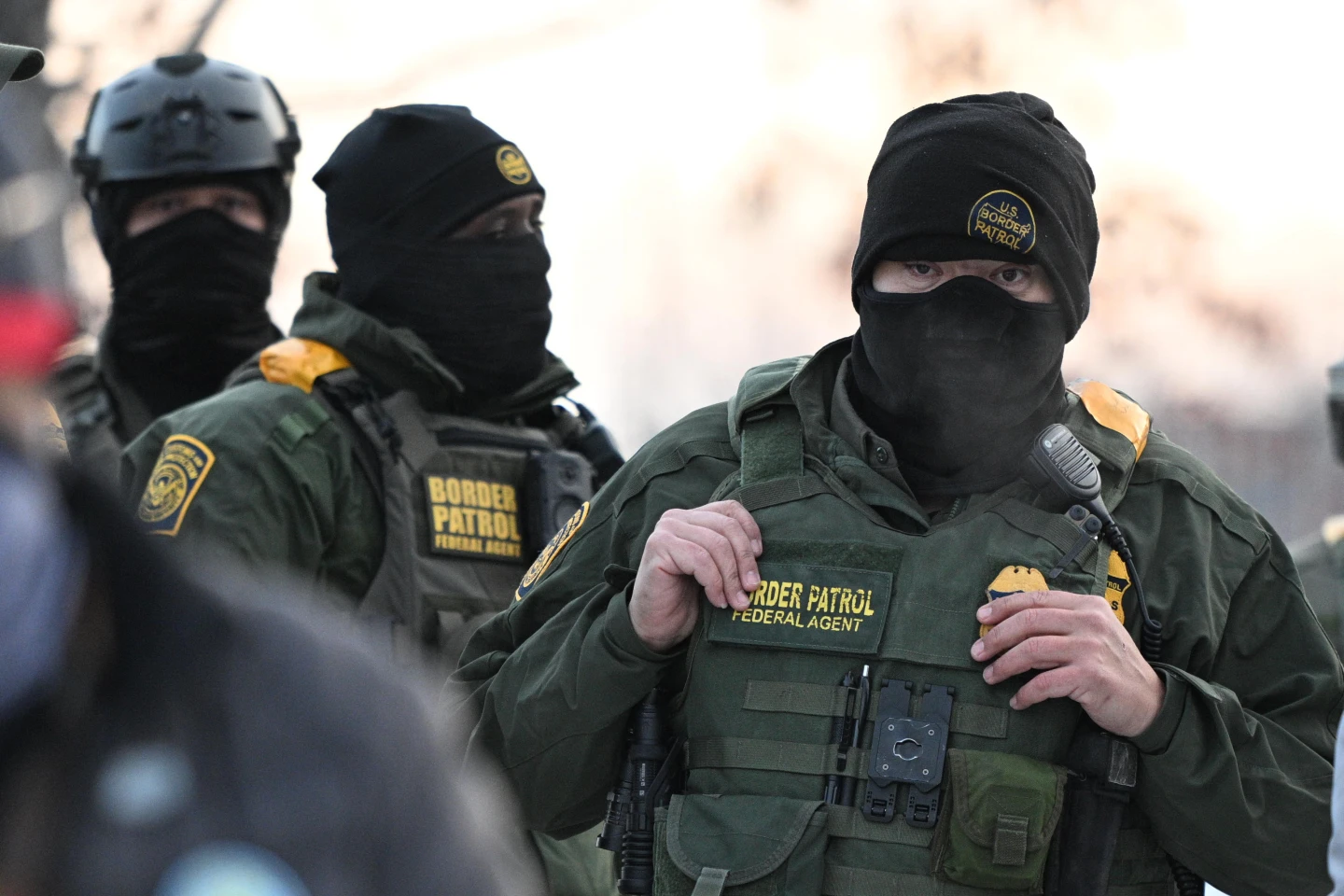
States across the U.S. are intensifying their efforts to prohibit law enforcement from wearing masks, sparked by a federal ruling that suspended a California law intended to restrict facial coverings by federal immigration agents. Washington state is at the forefront of this movement, with a new law soon to be enacted that limits facial coverings worn by law enforcement officers.
The push for mask restrictions ties back to federal immigration enforcement practices under President Trump, where federal agents sometimes donned masks during operations, leading to allegations of intimidation and a lack of accountability. California's law was briefly blocked in February; however, the 'green light' that followed has prompted other states to explore similar legislation.
Lawmakers in Washington are not alone; bills aimed at limiting facial coverings have gained traction in Oregon, Virginia, Hawaii, and several others. Supporters contend that these measures enhance transparency and public trust in law enforcement, while critics—including officials with the Department of Homeland Security—call the manifestos 'reckless.'
The legal grounding for the new measures seems clearer as Washington’s law applies broadly to all law enforcement officials. State Sen. Javier Valdez stated, “Masking up creates intimidation and fear. If you’re a law enforcement official, the public deserves to know who you are.”
Despite the effort to improve accountability, skepticism persists among Republican lawmakers, who question why such restrictions do not apply to civilians, particularly those protesting. This legal conundrum raises critical discussions about the balance of safety and transparency in a politically charged context.
Currently, 23 states and the District of Columbia enforce some form of prohibitions against identity-concealing masks in public, but the expansion of these restrictions continues to be both politically sensitive and constitutionally complex.