The disappearances and deaths of at least 10 people tied to sensitive US research have drawn scrutiny from online sleuths and now federal investigators. But for grieving relatives, all the wild speculation is disgusting.
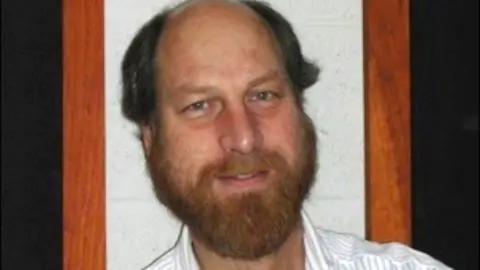
Carl Grillmair would laugh at the conspiracy theories about his killing, says his widow.
I think it's absolute nonsense, says Louise Grillmair. I mean, there's the facts, and they're out there.
Her 67-year-old husband was gunned down at their Llano, California, home in February. Grillmair's alleged killer, a 29-year-old local man, Freddy Snyder, has been charged with murder and burglary and is due in court next week for his arraignment.
Despite the arrest, Grillmair figures prominently in conspiracy theories about the deaths and disappearances of about 10 people with connections to top-secret labs or scientific work.
They are often lumped together as missing scientists, but the list includes an administrative assistant, an Air Force general, an engineer and a custodian, spanning several fields, including research into exoplanets and pharmaceuticals.
Online sleuths have suggested the cases may be connected, prompting investigations by the US House of Representatives Oversight Committee and the FBI, despite established explanations and family members' attempts to quell the hysteria.
Grillmair's wife believes her husband was targeted in a misguided revenge plot, stemming from a prior encounter with a man who exhibited erratic behavior on their property.
The situation has only intensified with the disappearance of retired Air Force General William Neil McCasland, whose wife sought to dispel misinformation following his vanishing. She noted signs suggesting he had “planned not to be found,” leading to further public speculation.
Additionally, cases like that of MIT physicist Nuno Loureiro, murdered by a former classmate, have exposed the dangers of reducing tragedies into conspiracy fodder. Louise Grillmair expressed concern that the speculations denigrate the memories of the deceased.
As families confront the intense emotions surrounding these incidents, a desire to illuminate their loved ones' lives beyond sensationalized narratives emerges. Louise Grillmair wonders why the world cannot appreciate her husband's scientific contributions alongside his generous character.