Bulgaria - the poorest country in the European Union - has become the 21st member of the eurozone, leapfrogging more obvious and prosperous candidates like Poland, the Czech Republic and Hungary.
For mostly urban, young and entrepreneurial Bulgarians, it's an optimistic and potentially lucrative leap - the final move in a game which has brought Bulgaria into the European mainstream - from NATO and EU membership, to joining the Schengen zone, and now the euro.
For the older, rural, more conservative parts of the population, the replacement of the Bulgarian lev by the euro provokes fear and resentment.
The lev - meaning lion - has been the Bulgarian currency since 1881, but it has been pegged to other European currencies since 1997 - first the Deutschmark, then the euro.
Opinion polls put Bulgaria's 6.5 million population more or less equally divided on the new currency, and political turmoil is not making the transition easy.
Prime Minister Rosen Zhelyazkov's coalition government lost a confidence vote on 11 December, after mass protests against the 2026 budget. Bulgaria has held seven elections in the past four years - an eighth looks likely early next year.
I don't want the euro, and I don't like the way it has been imposed on us, Todor, 50, a small business owner in the central town of Gabrovo, told the BBC. If there were a referendum, I reckon 70% of the people would vote against it.
A referendum on euro adoption was proposed by President Rumen Radev but rejected by the outgoing government. Todor's business had a bad year because of high inflation, and he believes rising costs are fueled by fear of the euro.
Conversely, Ognian Enev, 60, who owns a tea shop in Sofia, expresses more optimism: It's just a technical change. It doesn't bother me. He and other shopkeepers are ready to transition to the new currency.
Throughout January, payments can be made in both lev and euros, but from 1 February, the lev will no longer be accepted.
The law requires all shops to display prices in both currencies since August 2025. Consumers are assured of protection against price rounding, although some costs, like public transport, are set to decrease slightly.
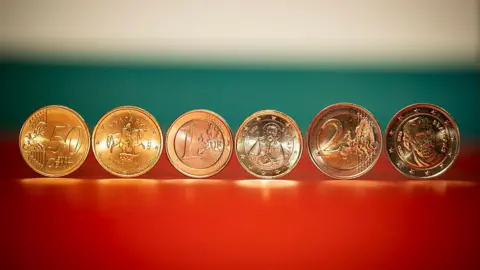
The design of the euro coins has incorporated Bulgarian symbols to combat concerns over losing national sovereignty.
As Bulgaria embarks on this new financial chapter, the impact of the euro adoption remains a topic of contention among the populace, with lessons from other countries' experiences being crucial for its success or failure.