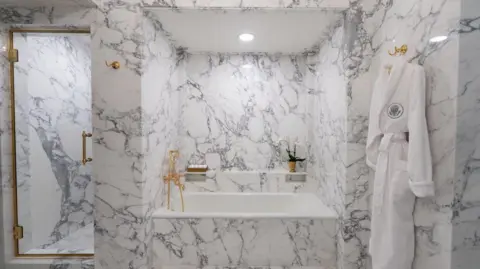
US President Donald Trump has unveiled renovations to the bathroom in the Lincoln Bedroom, as his remodelling of the White House continues.
Trump shared photos of the new bathroom on social media, saying it had been renovated in the 1940s in an art deco green tile style, which was totally inappropriate for the Lincoln Era.
He claimed the new black and white marble is very appropriate for the time of Abraham Lincoln and, in fact, could be the marble that was originally there!.
This renovation is part of Trump's broader changes to the White House, including the recent demolition of the East Wing to accommodate a multimillion-dollar ballroom.
The bathroom is a part of Abraham Lincoln's office and cabinet room, which former President Harry Truman fixed up as part of his massive renovation of the White House in the late 1940s. The White House Historical Association states that wallpaper in Lincoln's office was once colored in green and gold.
Post-renovation, the bathroom features gold fixtures and accents for the sink, bathtub faucet and shower door, as well as a chandelier. The White House confirmed that the renovation was privately funded at no cost to the taxpayer.
However, Trump's modifications have faced backlash from conservation groups and political adversaries, with critics arguing that he should have sought public review before implementing such changes that could overshadow the classical style of the White House.
Trump defended his plans, stating that the ballroom construction, which he funds with personal donations, would not interfere with the existing structure despite plans to tear it down. Conservationists echo concerns about his previous alterations, including transforming part of the Rose Garden into a patio and lavish gilding throughout the Oval Office.
Amid the turmoil of a government shutdown over health insurance subsidies, criticism has intensified, with Democratic leaders accusing Trump of prioritizing renovation over critical governance. Former President Barack Obama chimed in, claiming Trump is focused on superficial changes rather than addressing pressing issues like healthcare.