Recent satellite images analyzed by experts have revealed that Iran is making significant upgrades to an underground complex situated near one of its key nuclear facilities. This activity appears to be in response to escalating tensions stemming from ongoing negotiations with US officials and President Donald Trump's threats of military action unless Iran agrees to new terms regarding its nuclear program.
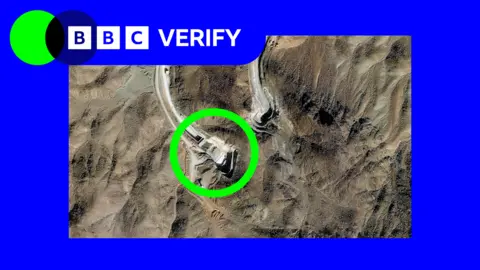
The images, initially examined by the Institute for Science and International Security (ISIS), indicate that tunnel entrances at Mount Kolang Gaz La, also known as Pickaxe Mountain, are undergoing fortification. Analysts have postulated that this facility may serve to protect Iran's uranium enrichment operations, although its precise operational status remains uncertain.
Despite Iran's assertions that its nuclear ambitions are peaceful, Trump has stated that Iran could be on the verge of developing a nuclear weapon, raising international alarm. In previous military actions, the US and Israel targeted various sites thought to be connected to Iran's nuclear enrichment initiatives. Although the Pickaxe Mountain complex was not bombed during these operations, nearby facilities like Natanz were hit, further amplifying security concerns.
New satellite imagery from February 10 shows fresh concrete laid over one entrance at Pickaxe Mountain, suggesting ongoing construction. Analysts from both ISIS and the UK firm Maiar identify this activity as a potential strengthening measure against aerial assaults.
Similar patterns of repair and fortification have been observed at the Natanz facility and the Isfahan complex, with entrances to Isfahan now sealed off with earth, indicating a possible strategy to protect sensitive operations from both air and ground assaults.
Experts believe these developments highlight Iran's preparations for a contextual environment where military strikes could be imminent. The reassessment of Iran's nuclear capabilities is thus contextualized against an evolving geopolitical backdrop, with calls for renewed negotiations from leaders like Rafael Grossi of the International Atomic Energy Agency, emphasizing the urgent need for diplomatic resolution.