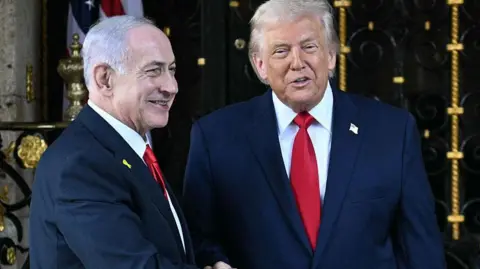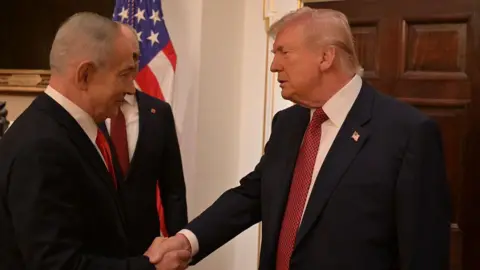
US President Donald Trump stated he urged the continuation of talks with Iran during a recent meeting with Israeli Prime Minister Benjamin Netanyahu but warned of possible actions against Tehran if a nuclear deal is not struck.
The meeting, held at the White House, coincides with escalating tensions in the Middle East and intensified negotiations to curb Iran's nuclear program.
Netanyahu aimed to convince Trump to devise a deal that would not only stop Iran's uranium enrichment but also dismantle its ballistic missile program and cut its ties with militant groups such as Hamas and Hezbollah.
While Iran expressed its willingness to limit its nuclear endeavors in exchange for relief from sanctions, it has firmly rejected other demands.
Ahead of the discussion in Washington, Iranian President Masoud Pezeshkian cautioned that Iran would not capitulate to excessive demands.
Netanyahu’s sixth visit to the US since Trump’s presidency highlights their close relationship. The leaders spoke privately for nearly three hours without a formal press conference following their discussions.
In a post-meeting note on Truth Social, Trump described the encounter as very good, asserting that negotiations with Iran must continue to explore the feasibility of a definitive agreement.
Concerns remain, however, regarding the nature of any potential deal, as Netanyahu pushed for stringent measures addressing not just nuclear activities but also wider security threats posed by Iran.
In the backdrop, the situation in the Middle East becomes more complicated as the US reinvigorates its military presence, with Trump making veiled threats against Iran while expressing a desire to reach a diplomatic resolution without escalating military confrontation.
The dynamics are further compounded by Netanyahu’s political pressures to leverage Trump’s support into a significant agreement that aligns with Israeli security interests.
Both leaders recognize the critical stakes at hand as they navigate these delicate negotiations with Iran, a nation that remains defiant in the face of American and Israeli demands for compliance.