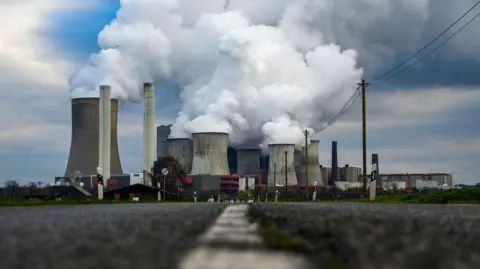
US President Donald Trump has announced the reversal of the so-called endangerment finding, a crucial Obama-era scientific ruling underpinning much of US environmental legislation. This governmental shift is expected to have a multitude of environmental and economic impacts, prompting speculation over future challenges likely to arise in the courts from environmental advocacy groups.
Experts predict several notable effects resulting from this policy change:
### Fewer Greenhouse Gas Emissions Restrictions
The primary consequence of the repeal is less stringent controls on greenhouse gas emissions for industries, especially automobile manufacturers. The endangerment finding identified key greenhouse gases as threats to public health and future generations, establishing a legal framework for regulating emissions under the Clean Air Act. Without this ruling, experts estimate there could be an addition of 7.5-18 billion tonnes of greenhouse gases by 2055—significantly raising costs associated with climate change.
### Cheaper Cars in the US
The administration has argued that the removal of the endangerment finding will lead to lower car costs. Car manufacturers could save approximately $2,400 per vehicle. However, environmental organizations express concern that while US vehicles may become cheaper, this move could hinder their competitiveness internationally, considering stricter emissions standards present in other markets.
### Nuisance Lawsuits
The revocation of the endangerment finding may also unleash a wave of public nuisance lawsuits. This legal development could see states and communities challenging polluting companies in court, reminiscent of pre-2011 practices, where multiple states pursued damages from industries linked to environmental degradation.
### Public Health Risks
Experts, including those from the Environmental Defense Fund, warn that increasing emissions could lead to thousands of premature deaths and millions of additional asthma cases by 2055. This starkly contradicts the EPA's assertion that such emissions standards are not essential to their mission of safeguarding human health.
### Competitive Disadvantages in Global Renewables
As the US rolls back emissions regulations, an increasing concern is how this will affect its position in the global renewable energy race. Other nations, particularly those in the EU and Asia, are accelerating their investments in clean energy, putting American manufacturers at risk of falling behind.
### Regulatory Landscape Changes
The Trump administration claims this deregulatory measure is a historic effort, anticipated to alleviate economic pressures on American taxpayers and businesses. However, critics argue it may lead to negative implications for global environmental leadership and sustainable innovation.
Overall, while the Trump administration heralds economic benefits from this policy shift, the long-term environmental and health effects may pose profound challenges for future administrations and the American public.
Experts predict several notable effects resulting from this policy change:
### Fewer Greenhouse Gas Emissions Restrictions
The primary consequence of the repeal is less stringent controls on greenhouse gas emissions for industries, especially automobile manufacturers. The endangerment finding identified key greenhouse gases as threats to public health and future generations, establishing a legal framework for regulating emissions under the Clean Air Act. Without this ruling, experts estimate there could be an addition of 7.5-18 billion tonnes of greenhouse gases by 2055—significantly raising costs associated with climate change.
### Cheaper Cars in the US
The administration has argued that the removal of the endangerment finding will lead to lower car costs. Car manufacturers could save approximately $2,400 per vehicle. However, environmental organizations express concern that while US vehicles may become cheaper, this move could hinder their competitiveness internationally, considering stricter emissions standards present in other markets.
### Nuisance Lawsuits
The revocation of the endangerment finding may also unleash a wave of public nuisance lawsuits. This legal development could see states and communities challenging polluting companies in court, reminiscent of pre-2011 practices, where multiple states pursued damages from industries linked to environmental degradation.
### Public Health Risks
Experts, including those from the Environmental Defense Fund, warn that increasing emissions could lead to thousands of premature deaths and millions of additional asthma cases by 2055. This starkly contradicts the EPA's assertion that such emissions standards are not essential to their mission of safeguarding human health.
### Competitive Disadvantages in Global Renewables
As the US rolls back emissions regulations, an increasing concern is how this will affect its position in the global renewable energy race. Other nations, particularly those in the EU and Asia, are accelerating their investments in clean energy, putting American manufacturers at risk of falling behind.
### Regulatory Landscape Changes
The Trump administration claims this deregulatory measure is a historic effort, anticipated to alleviate economic pressures on American taxpayers and businesses. However, critics argue it may lead to negative implications for global environmental leadership and sustainable innovation.
Overall, while the Trump administration heralds economic benefits from this policy shift, the long-term environmental and health effects may pose profound challenges for future administrations and the American public.