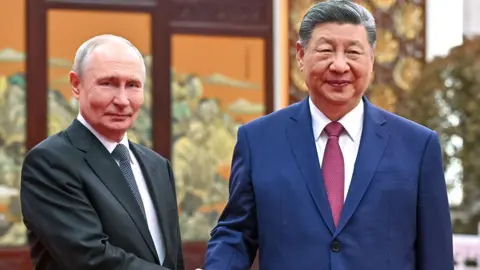
As they strolled through Tiananmen Square in Beijing last September, Chinese President Xi Jinping and Russian President Vladimir Putin appeared to muse over the possibility that organ transplants could dramatically extend human life. Human organs can be continuously transplanted. The longer you live, the younger you become, and even achieve immortality, Putin's interpreter was heard saying. Some predict that in this century, humans may live up to 150 years old, Xi's interpreter was heard responding.
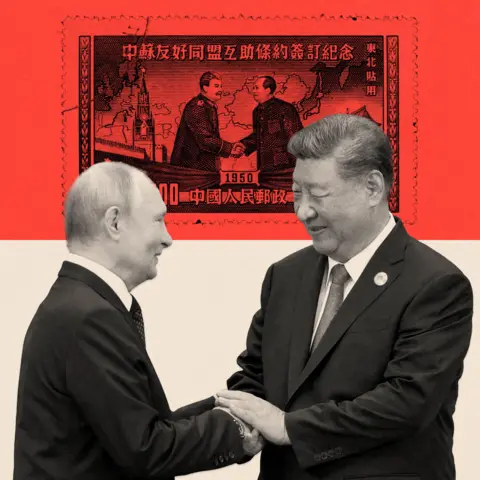
This whimsical conversation was a fitting reflection for two strongmen, who have described each other as best friends, and who, after a combined 39 years in power, show no signs of stepping down. It provides a rare insight into a highly secretive relationship, marking a complex partnership between China and Russia. A relationship often misunderstood, marked as an 'axis of authoritarianism' by some analysts, yet deeply intertwined due to shared interests and mutual geopolitical objectives.
Putin is set to return to Beijing this week, coinciding with the 25th anniversary of the Treaty of Good-Neighbourliness and Friendly Cooperation between Russia and China. The differences between the dynamics of Xi's recent meeting with U.S. President Donald Trump and Putin’s low-key approach highlight the unique and strategic nature of Sino-Russian relations.
Economic dependency has significantly shaped their partnership. China is now Russia's largest trading partner, while Russia accounts for a mere 4% of China's international trade. The recent sanctions imposed on Russia by the West have pushed Moscow deeper into Beijing's arms, making cooperation a necessity rather than a choice. Huawei stands as a prime example, stepping into the void left by Western companies in the Russian telecommunications sector.
Though seen as a junior partner, Russia is acutely aware of the risks posed by their imbalanced relationship, leading to calls for an equitable standing. Russia's vast energy resources and strategic services remain integral to China, especially as energy security becomes a priority amidst increasing global tensions.
Despite diverging interests, the connection between these two nations is robust, largely characterized by mutual respect on sensitive matters, allowing them to overlook criticisms that other nations might face. Their collaboration centers around practical aspects, particularly flourishing trade and shared positions regarding international issues.
China and Russia may differ in their political trajectories, but their comprehensive ties illustrate a nuanced relationship that persists through various geopolitical shifts. The human aspects of this alliance, whether through cultural exchanges or economic interaction, also bind the two countries closer together, emphasizing their mutual dependency in a rapidly changing world.
While skeptics may predict the downfall of this partnership, the continuing realpolitik indicates that China and Russia will sustain their complex yet beneficial alliance in the near future, marking a profound shift in the global balance of power.