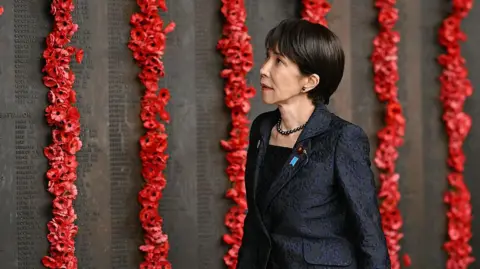
Japanese Defence Minister Shinjiro Koizumi told the BBC that Japan must strengthen its defence capabilities and revisit the pacifist constitution that has shaped the country since World War II.
Koizumi said the government’s push for new arms‑export rules – allowing lethal weapons to be sold or transferred to 17 partner countries, including the United States, United Kingdom, Australia, the Philippines, Indonesia and New Zealand – is part of a broader multi‑layered deterrence strategy designed to stop future conflict in the Indo‑Pacific.
The minister stressed that Japan’s security policy must evolve as the regional dynamic has changed over the past eight decades, arguing that a revision of Article 9 is necessary to keep the nation “peaceful yet prepared.”
“If we cannot satisfy the current security environment, we may be left with a silent defence that no longer protects us,” Koizumi said, citing China’s growing military footprint near Japan’s Senkaku/Diaoyu islands and North Korea’s ballistic‑missile tests.
Prime Minister Sanae Takaichi, who came to power in October 2025, has also accelerated defence spending to 2% of GDP – double the post‑war benchmark – and is pushing for the same constitutional reforms.
Japan plans to invest in surface‑to‑ship missiles, unmanned drones, and cyber‑defence assets, with many analysts seeing an opportunity for domestic defence firms to become global competitors.
However, critics caution that officially recognising or expanding the Self‑Defence Forces could undermine the pacifist spirit of Article 9, while some argue that Japan’s current constitution already provides sufficient deterrence against threats such as a Chinese attack on US forces based in Okinawa or Kyushu.
Koizumi added that any constitutional change must ultimately be decided by a national referendum, a process he believes requires careful timing and political judgement.
“Japan has a responsibility to safeguard itself,” he stated. “We should play a distinct role beyond merely being a US ally and contribute uniquely to regional security.”
While Japan re‑examines its role in the region, it continues to maintain the underlying US‑Japan security alliance, hosting the largest contingent of US forces abroad.
With the threat environment intensifying, Japanese officials see a clear need for stronger, more adaptable forces that can counter new challenges while balancing ties with China.