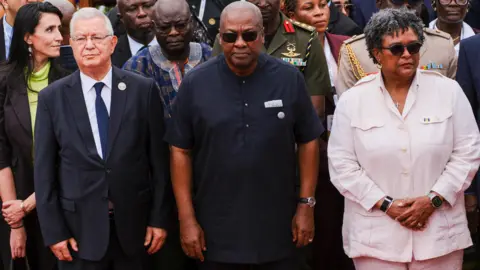
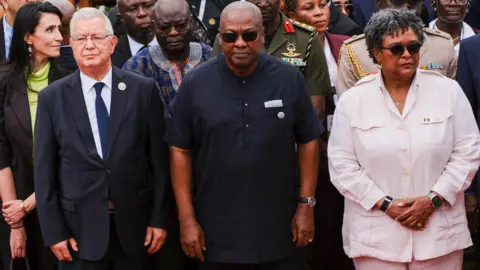
In a landmark gathering held in Accra, African and Caribbean leaders called for a formal apology and reparations from countries that benefited from the transatlantic slave trade. The plea followed a three‑day consultation in Ghana aimed at advancing reparatory justice.
The initiative was triggered by a United Nations General Assembly vote in March that classified the slave trade as the "gravest crime against humanity." The resolution urged member states to fund a reparations scheme for survivors’ descendants.
A 19‑point plan – unveiled during the conference – calls for comprehensive debt relief, the return of looted cultural artifacts, a global reparations fund, and explicit attention to the disproportionate effect on African women and girls. No fixed monetary amount was set, but the provisions outline the scope of responsibility held by former colonial powers.
Ghana’s President John Dramani Mahama said, "History does not ask us to inherit guilt, but it asks us to inherit responsibility," as delegates debated how best to translate historic obligations into concrete outcomes.
French President Emmanuel Macron added that enslaved people were "dehumanised and treated as goods," yet cautioned that reparations should not be perceived merely as a financial cheque that would signify an end to the story.
The UN vote saw 123 nations in favour, with the United States, Israel, and Argentina voting against the classification. The United Kingdom, the European Union, and other states opted to abstain, citing the lack of legal binding force of General Assembly resolutions.
Official responses highlighted differing views on liability. The UK ambassador to the UN argued that contemporary institutions cannot be held responsible for past injustices. Similarly, the U.S. ambassador criticized the lack of clear definition for reparations recipients and the absence of a legal right to restitution.
Historically, reparations have predominantly benefited slave owners rather than the enslaved, with the UK paying the equivalent of more than £16 bn in today’s money to former slave owners after abolition—none directed toward African descendants.
While no nation has paid reparations to descendants of enslaved Africans, the momentum generated by this conference underscores a growing demand for a global reckoning and tangible redress for the enduring legacy of the slave trade.