
In brief
The International Maritime Organization has committed to evacuating more than 11 000 sailors stranded in the Gulf after tense standoffs between the U.S. and Iran. The operation will be carried out in cooperation with Iran, Oman, the United States and other coastal states, with daily progress reports to be issued. U.S. Secretary of State Marco Rubio is touring the Gulf, emphasising that the Strait of Hormuz remains an international waterway free from tolls. A temporary maritime corridor will open to allow these vessels to exit safely, with the aim of restoring maritime security and ending attacks on civilian shipping.
The International Maritime Organization (IMO) announced plans to carry out a large‑scale evacuation for more than 11 000 sailors stranded in the Gulf of Oman, following renewed hostilities between the United States and Iran.
IMO Secretary‑General Arsenio Domínguez confirmed that the operation will be coordinated with Iran, Oman, the United States, and other coastal states, ensuring safe navigation for the vessels involved. He noted that “necessary safety guarantees have been secured and the conditions for safe passage have been thoroughly verified.”
The initiative appears to follow an interim agreement signed last week to end the conflict, though both the United States and Iran are still negotiating the details of a Memorandum of Understanding (MoU). The MoU would also involve the International Atomic Energy Agency inspecting Iran’s nuclear programme.
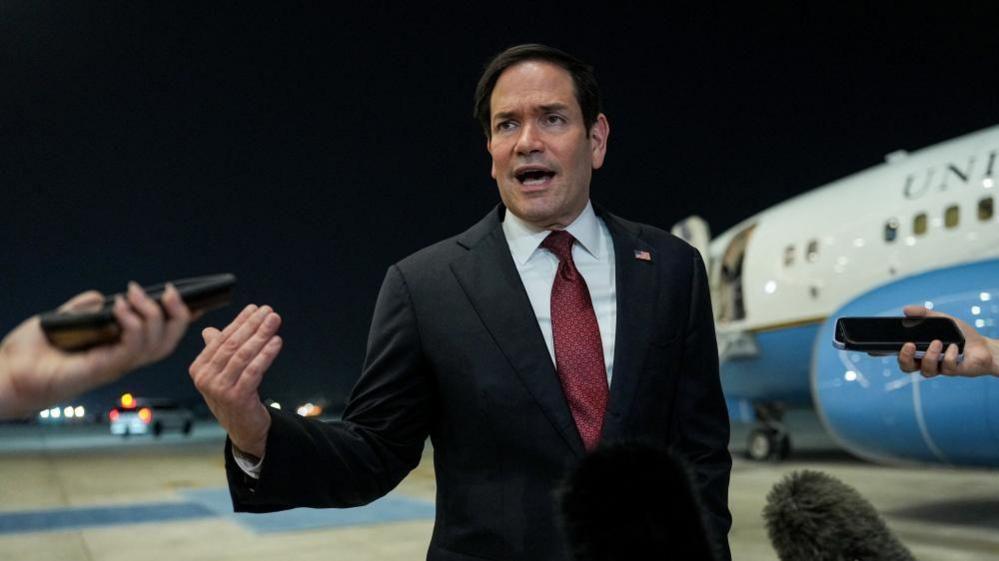
U.S. Secretary of State Marco Rubio has been touring the Gulf, starting in the United Arab Emirates, and later visiting Kuwait and Bahrain, which host U.S. military bases. During his talks he warned that no country should impose tolls or fees on the Strait of Hormuz, citing international law and the need to keep the waterway open for all shipping.
The evacuation plan will open two temporary routes through the strait. The IMO will contact individual vessels for clear instructions, and daily reports on ship movements will be issued to track the progress of the rescue.
The plan’s successful implementation is crucial, as the strait’s closure since 28 February 2026 has severely impacted global oil prices and the flow of essential commodities such as fertiliser. Early data from maritime intelligence firm Kpler indicate that at least 172 vessels have passed through the reopened strait, though the daily traffic remains below the pre‑conflict average of roughly 138 crossings.
Secretary of State Marco Rubio speaking to reporters after landing in Abu Dhabi
