On Sunday, Swiss voters will head to the polls to decide a plan that would put a hard cap on the country’s population at 10 million. The proposal is championed by the Swiss People’s Party (SVP), which frames it as a “sustainability initiative” aimed at easing pressure on housing, public services and the environment.
Opposition from the federal government, other major parties, business leaders and trade unions is fierce. They have dubbed the proposal a “chaos initiative,” arguing it would deprive hospitals and hotels of essential staff and strain Switzerland’s already delicate relationship with the European Union (EU). The Swiss are worried that a population cap could force the country to walk out of its commitments to the EU’s single market and free‑movement agreements.
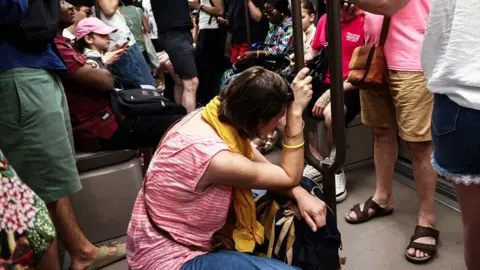
Switzerland’s population has surged from 7.3 million in 2002 to about 9.1 million today, with 27 % of residents born abroad. Many voters are frustrated by overcrowded Swiss trains, sky‑high rents, and rising health costs—issues that the population cap proponents say can be mitigated by limiting immigration.
Opinion polls from the period before the vote show a razor‑thin lead for a “No” vote (52 % opposed, 45 % in favour, a sizeable share undecided). The question now is whether the cap would actually solve the supply and demand imbalances—or simply re‑pack them.
The referendum would kick in when Switzerland reaches 9.5 million residents, with a target ceiling of 10 million before 2050. Measures could include setting limits on asylum numbers and ending family‑reunification rights for foreign workers. If enacted, existing EU agreements—including the free‑movement of people—would have to be terminated, risking diplomatic isolation.
Business concerns have been voiced by Economiesuisse, whose chief economist Rudolf Minsch warned that “the motion could create challenges in our relations with the European Union.” Switzerland’s chief trading partner and main source of migration, the EU, will likely be reluctant to compromise on fundamental agreements.
The proposal is framed as a safeguard for the Swiss way of life. Helin Genis and Nils Fiechter, young local politicians from immigrant families, illustrate the limits’ polarising impact: Genis hails Switzerland’s ongoing social and economic development, while Fiechter worries that unchecked immigration will erode the country’s cultural landscape.
Demographic trends add another layer of urgency. About 20 % of the Swiss population is now over 65, heightening demand for healthcare and pension funding. Young Swiss workers—and those from immigrant families—are essential to filling the labour vacuum created by an ageing populace, a fact critics of the cap argue makes restrictive immigration policy counter‑productive.
Switzerland’s defence spending has increased, and the country is exploring tighter defence ties with neighbours, amid rising fuel prices stemming from the Russia‑Ukraine conflict and the war in Iran. In addition, Swiss goods face punitive US tariffs—despite a 15 % duty agreement that remains unresolved—adding pressure to maintain good standing with European partners.
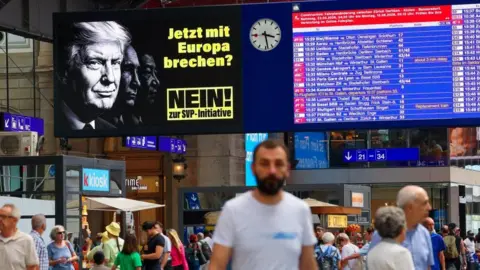
Posters warning against the referendum show President Donald Trump alongside figures such as Vladimir Putin and Xi Jinping, hinting at geopolitical repercussions. The broader picture is one in which the small but prosperous nation must weigh domestic pressure against its standing within Europe and the global arena.