In brief
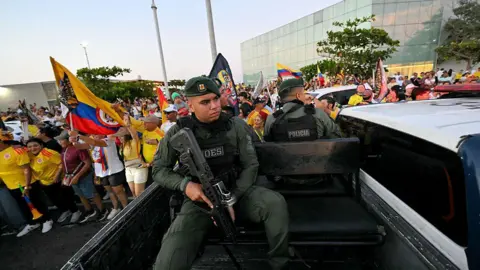
Colombia’s looming presidential election is framed by an escalating violent conflict that has left millions displaced and half‑a‑million dead. The unrest is a stark backdrop as the left‑wing Senator Iván Cepeda pushes for negotiated peace and social reform, while the right‑wing businessman Abelardo de la Espriella, endorsed by Donald Trump, demands a hard‑line military crackdown and mega‑prisons. Both candidates’ plans could shift the balance of power in a country that has never been more divided over security, governance and national identity.
Colombia’s 70‑year conflict—between insurgent groups, cartels and the state—has left more than half a million dead, shattered communities, and forced millions into exile. In the trade‑off between peace and security, voters are forced to weigh the terrible costs of a war that has only recently begun to use the ballot.
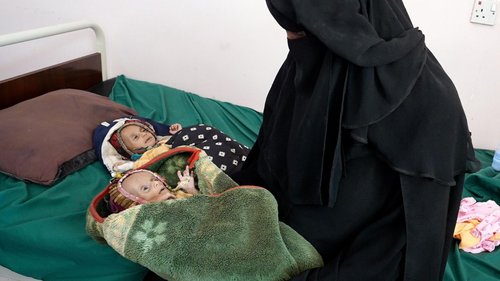
Edilma Martinez Flores told a support centre in Bogotá: “My brother was murdered for not paying an extortion payment in front of his children.” Her testimony is one of dozens of stories that show how the violence is a daily, personal horror for many Colombians.
In the most recent bout of violence, the ELN and FARC dissidents clashed near the Venezuela‑Colombia border, displacing tens of thousands of people and setting off a surge of conflict that has pushed the 2026 election to the forefront of domestic politics.
At the center of the race are two very different candidates: Lieutenant‑Colonel and business‑man Abelardo de la Espriella, an outspoken advocate for hard‑line security measures and a U.S.‑backed foreign‑policy mindset, and left‑wing Senator Iván Cepeda, who calls himself the architect of President Gustavo Petro’s “total peace” approach and is accused of letting armed groups stall cease‑fires to expand their control.
Vanilla descriptions of the candidates’ rhetoric:
- De la Espriella promises “10 mega‑prisons,” a dirty‑critical attack on the armed groups, and total war in the name of justice, with an end to negotiations.
- Cepeda pledges to combine severe state repression with social programmes that address poverty and lack of state presence, insisting that violence cannot be solved only by force.
One of the key issues is the high level and recent up‑surge in displacement. According to Isabelita Mercado Pineda, a government advisor for peace, victims and reconciliation in Bogotá, forced displacement rose 300% between 2024 and 2025, the highest in two decades. Her assessment points to a failure of the strategy that provides “a carrot but not enough stick”.
On the ground, refugees and displaced families live in constant fear of gang extortion, bombings, kidnappings and drug‑related violence. Stories like that of Erin Gamboa of the Chocó region, whose half‑brother disappeared after a conflict with FARC, underline how functional that fear has become. He talks of “so much crime” and “you can’t go out in peace anymore.”
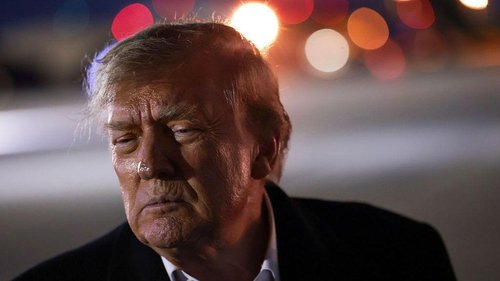
The election’s outcome will shape the country’s future security strategy. Trump’s endorsement of De la Espriella, scorned by the left as foreign interference, reflects the new international stance toward criminal groups in Latin America. “If Abelardo wins…Colombia will have the total support and strength of the United States behind him” he says. De la Espriella’s supporters say that his tough‑on‑crime reputation and promise of mega‑prisons will give Colombia the edge over the rest of the Latin American region.
Wovelt & Sierra files from the protests of victims of insurgency in the highway along the PAG and railway, run by scorpions names. In the Plaza iarl, the article of conductor ha never twice. They bring a lascely approach to a department of distinct the ones who pays for it somewhere else.
What does that mean for the people? The representative of voters, in a country that has not seen such violence for decades, is the measure of their future.
With two radically different candidates on the ballot, the 2026 presidential election will be the defining moment for how Colombia deals with the pervasive crisis of conflict, security and state presence.