Russian families use AI to 'resurrect' loved ones killed in Ukraine
Russian families are experimenting with artificial intelligence to create videos that make it appear as if their lost soldiers have returned from the front—an effort that offers comfort but also sparks a backlash of ethical concerns and public offence.
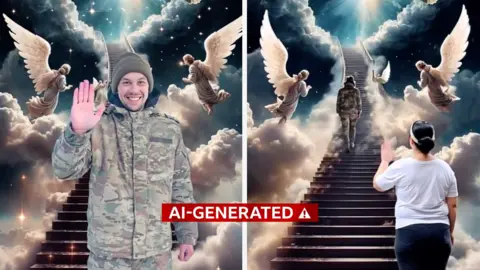
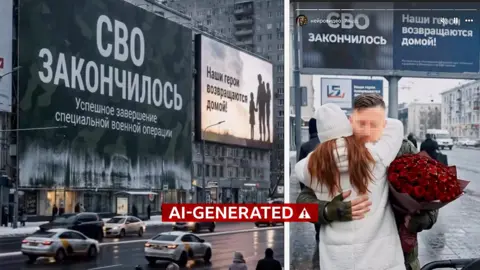
Rousing orchestral music is the backdrop to a 15‑second piece posted on Instagram by the popular blogger Katya Jin. The clip shows a woman in a snowy Moscow street—complete with billboards praising a “ended war”—turning to embrace a man in military uniform. Jin’s family story is used as the template, and the clip is billed as a chance for funeral families to see their loved ones again.
AI‑generated clips of soldiers have proliferated on Russian social media since mid‑2025, with many posthumous avatars portraying soldiers as heroes defending their country. They are riddled with deepfakes, often omitting war damage, and provoke outrage among Ukrainians who find the images cruelly distorting reality.
For some grieving families, these deepfakes provide a way to mourn, and in rare cases they are used during funeral services. Responses online are sharply divided: some say the technology brings them to tears, while others see the practice as unethical.
Katarzyna Nowaczyk‑Basińska, a researcher at Cambridge’s Leverhulme Centre for the Future of Intelligence, warns that the long‑term psychological and social impacts remain largely unknown. “Creating 'deadbots' of Russian soldiers is extremely complex and ethically difficult to assess in a clear‑cut way,” she says.
‘You should be ashamed’
Anna Korableva of Kamensk‑Uralsky started making AI videos in May 2025 with her sister to help people “cope with unfinished farewells.” She says the work was hard initially, but she later focused on the technical side to produce beautiful, meaningful videos.
The majority of requests come from families of soldiers killed on the battlefield since Russia’s full‑scale invasion of Ukraine in 2022. The BBC, Mediazona and volunteers have so far verified the deaths of at least 225,000 Russian soldiers, though the real death toll is believed to be far higher.
Other AI clips show living soldiers wrapped in angelic wings or appearing from the sky—an image of protection that many Russian users cling to despite the war’s volatility. These content creators charge anywhere from 200 roubles (£2) to 10,000 roubles (£100), and some are earning as much as 200,000 roubles (£2,000) a month.
Dubious value of AI‑generated content
Documents show these videos are part of a global ‘digital afterlife’ industry. The technology is already used in museums, courtrooms and political campaigns, and its use intensifies during wartime when “death and loss are dominant themes.”
There is an ongoing debate about whether these posthumous avatars truly help people handle grief or instead deepen their trauma. Some women purchased AI photos of deceased husbands for headstones, but reported little relief. Others keep AI images in their homes in hopes of feeling connected, even if it is a fantasy.
One user warned, “Be careful that loss doesn’t come knocking at your door. Some subjects should not be touched — but you just wanted to make money.”
Despite the mixed responses, recent research suggests this phenomenon is part of a wider ethical problem that intersects technology, culture and politics.