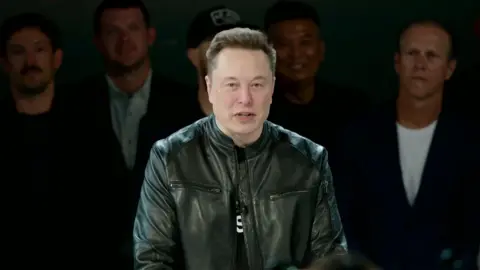
Elon Musk became the world’s first trillion‑dollar net‑worth holder on Friday after SpaceX’s IPO sent the company’s shares roaring upwards. Bloomberg’s 2026 rich‑list puts Musk’s wealth at $1.11 trillion (£828 bn).
SpaceX raised $75 bn from investors and underwriters before trading opened at $150, quickly spiking to $176.50 and closing around $161. The company was valued at $2.2 trillion on the Nasdaq.
With a 42 % ownership stake, Musk’s shares were worth $767.1 bn at market close, supplemented by $53.8 bn in options. His 42 % control effectively gives him unilateral command over all SpaceX decisions and spend.
The milestone has lit a fire‑storm of debate on wealth inequality. Musk’s fortune now matches the GDP of nations like Poland or Switzerland, and has already sharpened his influence in politics: from donating to Trump’s re‑election to cutting USAID budgets that could cost millions of lives.
Investors who flocked to the IPO wrestle with the paradox of high speculative valuation versus uncertain profitability. The company is currently unprofitable, losing over $9 bn in 2025-26, as it pours cash into AI, rocket, and satellite projects.
Robust investor sentiment is evident: Wealth Club’s Susannah Streeter sees the surge as proof of massive enthusiasm for Musk’s interstellar vision, while some analysts warn that hype and scarcity are propelling the rally beyond fundamentals.
SpaceX’s ambition stretches from building reusable rockets, launching Starlink satellites, to venturing into AI through acquisitions like xAI, and dreaming of a lunar economy – though the feasibility of such ventures remains uncertain.
More than 4,400 former and current employees are poised to become millionaires via stock options. The long‑term sustainability of SpaceX’s valuation hinges on whether the company translates ambitious goals into profitable reality.