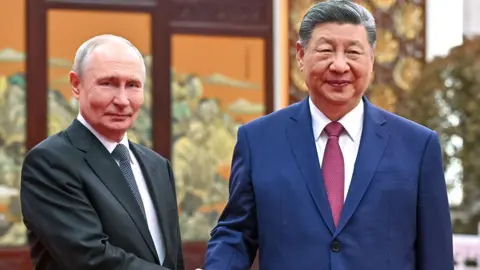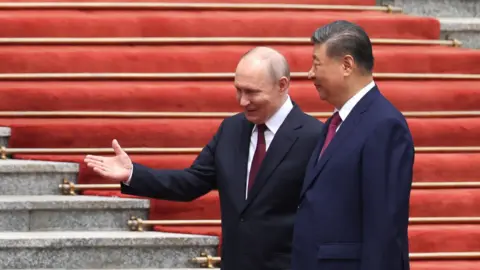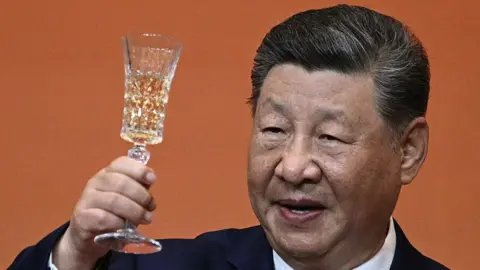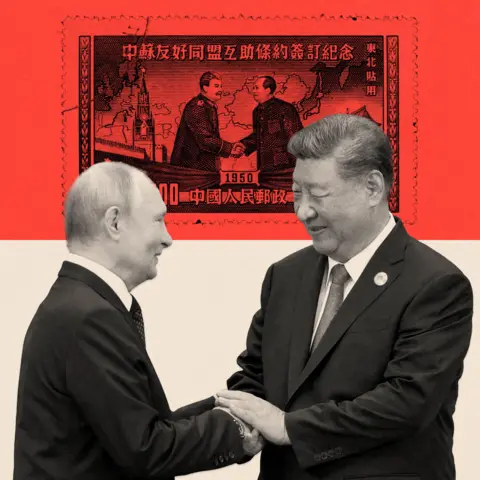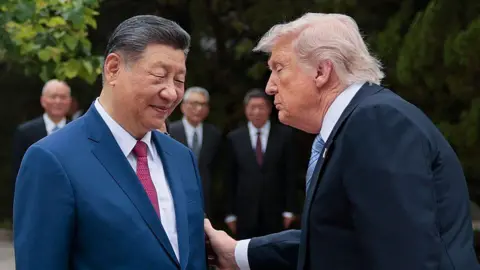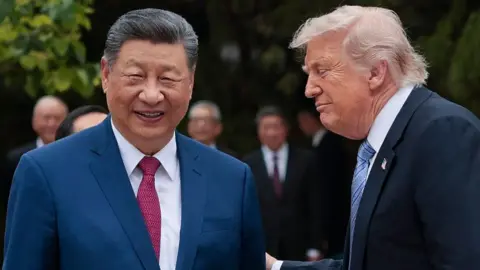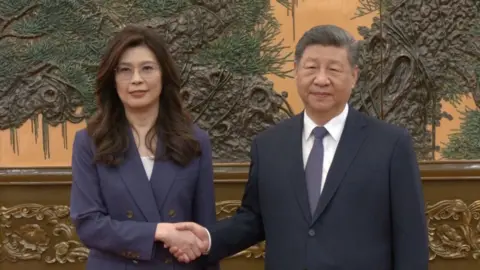
China's President Xi Jinping received Taiwan's main opposition party leader on Friday, in a rare meeting that underscored both sides' desire for cross-strait peace.
Cheng Li-wun, the first sitting leader of the Kuomintang (KMT) to visit China in a decade, framed her visit as a mission for promoting peace.
Since 2016, Beijing has severed high-level communications with Taiwan after the ruling Democratic Progressive Party (DPP) and its President Tsai Ing-wen took power, largely due to Tsai's refusal to endorse the concept of a single Chinese nation. This has led to criticism from the DPP, which labeled Cheng’s trip as being ‘subservient’ to Beijing.
Beijing claims Taiwan as a part of its territory, and has not excluded the use of force to assert its claims. During the meeting, Xi emphasized that both parties should prioritize safeguarding peace and stability in their shared homeland while urging a mutual stand against Taiwan independence.
Xi stated, “The leaders of our two parties are meeting today to safeguard the peace and stability of our shared homeland, to promote the peaceful development of cross-strait relations, and to allow future generations to share in a bright and beautiful future.”
Following the meeting, Cheng responded by stating that the "rejuvenation of the Chinese people is a shared aspiration of the people on both sides of the Strait.” She expressed hope that their cooperation could contribute positively to world peace and progress.
Cheng further asserted that future generations must understand that opposing Taiwanese independence is crucial to avoid conflict and foster cooperation, referencing the 1992 Consensus between the KMT and the Chinese Communist Party about recognizing ‘one China’ with room for differing interpretations.
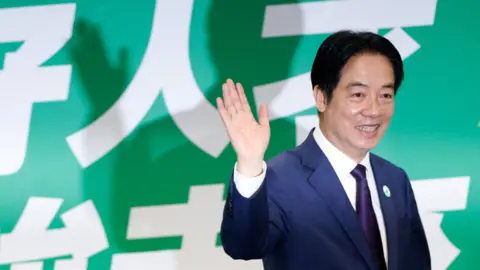
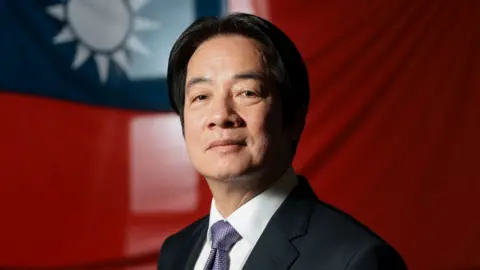
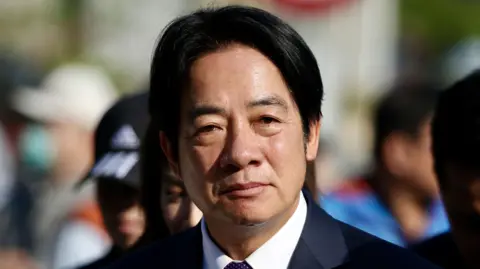
Despite the warm ties traditionally maintained by the KMT with China, analysts note Cheng's eagerness to engage with China represents a shift from her predecessors' more cautious approach. Nevertheless, Beijing continues to shun dialogue with Taiwanese President Lai Ching-te, whom they label a 'separatist'.
Most Taiwanese people identify as a sovereign nation while favoring a status quo that avoids both unification with China and a formal declaration of independence.