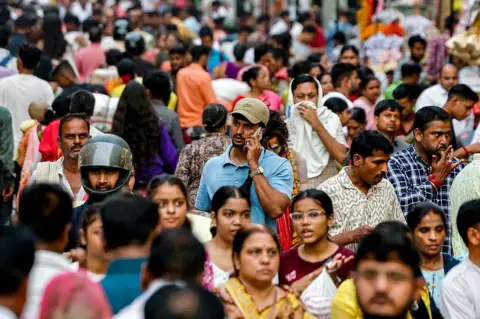
India has initiated its 16th census, a monumental task involving over three million officials designated to inquire from more than a billion residents. The census, which includes 33 questions covering aspects such as housing conditions, internet access, and marital status, marks the first population count in over a decade, since the last census in 2011.
As the world's most ambitious census project to date, this exercise seeks to paint a comprehensive picture of India's diverse populace, enabling informed policy-making and welfare distribution. The initiative comes at a time when India's population has surpassed that of China, now exceeding 1.4 billion.
This census will also delve into caste data, a politically sensitive subject, and implement two phases: the initial phase focuses on housing conditions, while the forthcoming second phase will enumerate the population comprehensively. Notably, for the first time, the census will leverage digital tools, with self-enumeration options available through an online portal.
The country's median age of 28 indicates a young demographic, creating both opportunities and challenges for future governance. The stakes are high as inaccuracies in data could impact resource allocation and social programs. Furthermore, the public’s anxiety surrounding data privacy adds a layer of complexity to this extensive enumeration effort.
The previous census faced delays due to the pandemic and administrative hurdles, but this current enumeration aims to reflect the evolving realities of India's changing society and economy, offering a critical baseline for future planning.
As the world's most ambitious census project to date, this exercise seeks to paint a comprehensive picture of India's diverse populace, enabling informed policy-making and welfare distribution. The initiative comes at a time when India's population has surpassed that of China, now exceeding 1.4 billion.
This census will also delve into caste data, a politically sensitive subject, and implement two phases: the initial phase focuses on housing conditions, while the forthcoming second phase will enumerate the population comprehensively. Notably, for the first time, the census will leverage digital tools, with self-enumeration options available through an online portal.
The country's median age of 28 indicates a young demographic, creating both opportunities and challenges for future governance. The stakes are high as inaccuracies in data could impact resource allocation and social programs. Furthermore, the public’s anxiety surrounding data privacy adds a layer of complexity to this extensive enumeration effort.
The previous census faced delays due to the pandemic and administrative hurdles, but this current enumeration aims to reflect the evolving realities of India's changing society and economy, offering a critical baseline for future planning.