Does your house have a concrete roof or a thatched one?
What is your main cereal? Do you have internet access - or just a basic mobile phone? And how many married couples live under your roof?
These are among the 33 questions that more than a billion Indians will be asked as the country launches the world's largest census on Wednesday, marking the first population count in over 15 years.
The two-phase exercise, billed as the world's most ambitious of its kind, will see more than three million officials spend a year counting every person in India.
India's 16th census - the eighth since independence in 1947 - will also include caste data and is seen as crucial for policy, welfare delivery, and political representation in the world's most populous country.
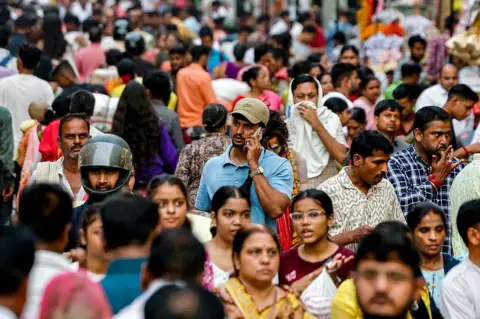
With over 1.4 billion people, India overtook China in 2023 according to the United Nations Population Fund. Yet, falling fertility and a median age of 28 mean it remains one of the world's youngest countries, with nearly 70% of its population of working age.
The last census was held in 2011, with the 2021 round delayed by the pandemic and later pushed back due to administrative issues, marking the first time the decennial exercise missed its schedule.
The census will cover 36 states and federally-administered territories, more than 7,000 sub-districts, over 9,700 towns, and nearly 640,000 villages. For the first time, it will be conducted digitally, with enumerators using mobile apps to collect and upload data.
Authorities have also introduced self-enumeration, allowing residents to submit details online via a 16-language portal that generates a unique ID for verification by census workers.
The census is essential for updating socio-economic policies and determining accurate resource allocation for public welfare, especially in light of recent transformations in urban and rural definitions across the country.