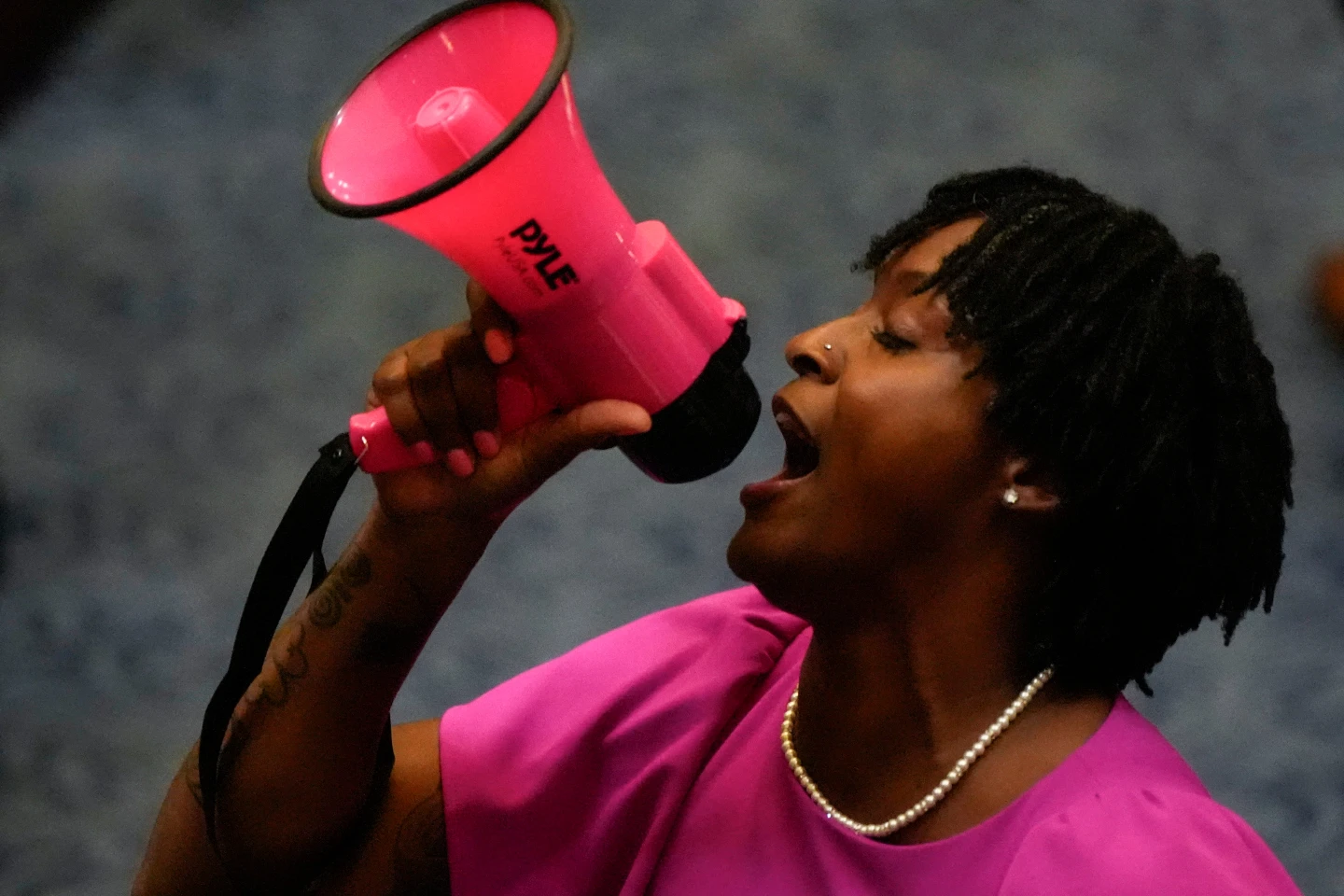
A recent court session in Florida examined the legality of newly drawn congressional districts designed to benefit Republicans. These districts are being challenged by voters who claim they violate a state constitutional ban on partisan gerrymandering.
Attorneys for the plaintiffs are urging the judge to block the new districts for the upcoming midterm elections, advocating for the reinstatement of the previously utilized maps. They argue that the redraw favors Republicans and undermines the electoral voice of many citizens. The judge has yet to provide a ruling timetable.
The controversy over Florida's redistricting is part of a wider national discussion on electoral maps, which has gained traction since former President Trump's push for redistricting several states, including Texas.
Recently enacted by the Florida Legislature and signed by Governor Ron DeSantis, these new congressional districts can potentially enhance the Republicans' hold on Congress. With Republicans already holding 20 of Florida's 28 congressional seats, the new map is anticipated to further tilt the balance in their favor.
The legal arguments hinge on Florida's 2010 constitutional amendment that explicitly forbids partisan map-making. Opponents claim the new configuration discriminates against Democratic voters while maintaining the districts of Republican voters.
In an attempt to enhance Republican chances, several southern states, such as Texas and South Carolina, are also undertaking redistricting measures, with debates on new attendance rules and primary dates. The results of these legislative actions will have significant implications on the upcoming elections.
As the national redistricting drama unfolds, observers will pay close attention to Florida’s legal repercussions and their impact on the broader political landscape leading to the November elections.