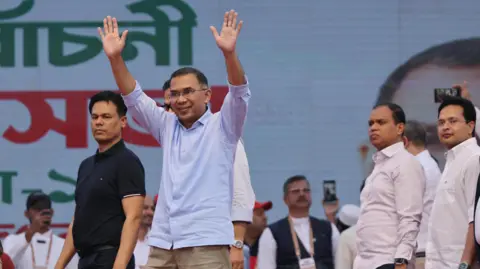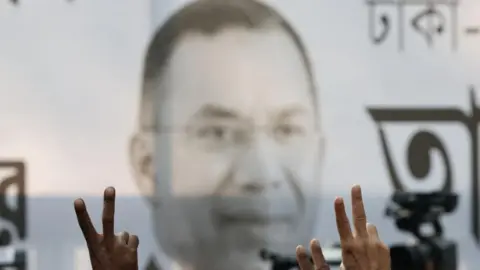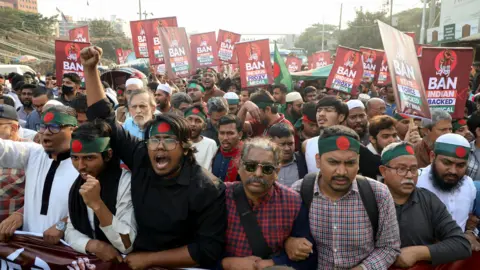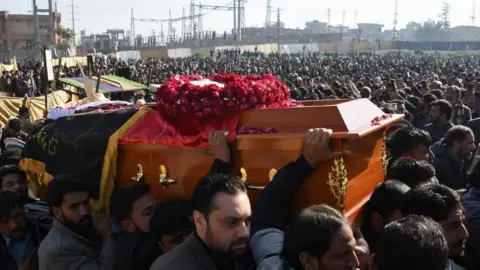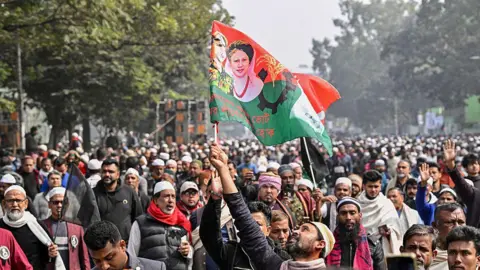
Hundreds of thousands of people travelled from across Bangladesh to the capital Dhaka on Wednesday to pay their final respects to former Prime Minister Khaleda Zia.
Zia, who was the country's first female prime minister, died on Tuesday from a prolonged illness. She was 80.
The mourners held out their hands in prayer and carried flags printed with her photographs as a motorcade carrying Zia's body - including the hearse wrapped with the national flag - drove on streets near the parliament house.
Flags were flown at half-mast and thousands of security officers were deployed.
I have come this far just to say goodbye. I know I won't be able to see her face, but at least I could see the [vehicle] carrying her for the last rites, Setara Sultana, an activist from Zia's Bangladesh Nationalist Party (BNP), told the BBC.
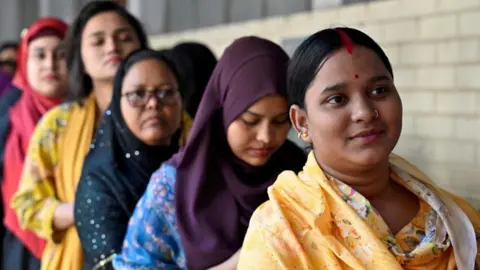
Sharmina Siraj, a mother of two, called Zia an inspiration, noting that stipends introduced by the former leader to improve women's education made a huge impact on her daughters.
India's External Affairs Minister S Jaishankar, the Speaker of Pakistan's National Assembly Sardar Ayaz Sadiq, and Bhutan's Foreign Minister Lyonpo DN Dhungyel were among those who attended the funeral.
The state funeral marks the end of Zia's extraordinary journey, from a homemaker to the first female prime minister of Bangladesh.
Zia was buried next to her husband Ziaur Rahman, who was assassinated in 1981 while serving as president - an incident that thrusted Zia into the political limelight.
For several years, along with her bitter political rival Sheikh Hasina, she fought for democracy and against military dictatorship, enduring arrests.
Zia's resilience drew admiration from her supporters, who say that despite various personal and political setbacks, years in opposition and convictions under Hasina's government, Zia never gave up, refused to compromise on her principles and stood her ground.
The fact that hundreds of thousands of people, including those who didn't vote for her party, turned up for the funeral would be seen as a reflection of her popularity among the masses.
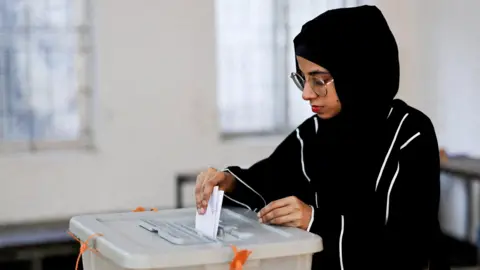
In her later years, she suffered from multiple health problems. Despite this, the BNP said she had intended to run for parliament in February 2026, when the country will vote for the first time since a popular revolution last year unseated Hasina.
Rahman, Zia's son, had only returned to Bangladesh last week after 17 years in self-imposed exile in London and stated, The country mourns the loss of a guiding presence that shaped its democratic aspirations.