
In brief
The election in Bangladesh marks a significant political shift following the 2024 protests that resulted in the ousting of Sheikh Hasina after a violent crackdown. More than 1,400 protesters were reported killed, leading to a spectrum of candidates from center-right and Islamist parties competing for power. A referendum on proposed constitutional changes also took place amidst heavy security measures.
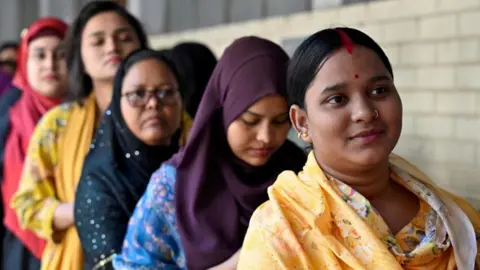
Votes are being counted in Bangladesh after the country held its first election since student-led protests ousted prime minister Sheikh Hasina in 2024. More than 2,000 candidates are vying for a seat in parliament, though none from Hasina's now-banned Awami League party. As many as 1,400 protesters were killed during the 2024 uprising, the UN says - with Hasina accused of having directly ordered the crackdown, an allegation she denies. The election pits the centre-right Bangladesh Nationalist Party (BNP) against a coalition led by the Islamist Jamaat-e-Islami which has joined forces with a party born out of the student uprising. Results are expected on Friday. Voters were also casting their ballots in a referendum on constitutional change proposed by the interim government to fix what it has called a completely broken political system. Nearly a million police and soldiers have been deployed to maintain law and order. Speaking after voting, interim leader Muhammad Yunus said the country had 'ended the nightmare and begun a new dream'. He voted in the capital Dhaka, as did the two leading candidates, Tarique Rahman for the BNP and Jamaat's leader Shafiqur Rahman.

