Burkina Faso's junta has announced a ban on all political parties, whose activities have been suspended since the military seized power in 2022.
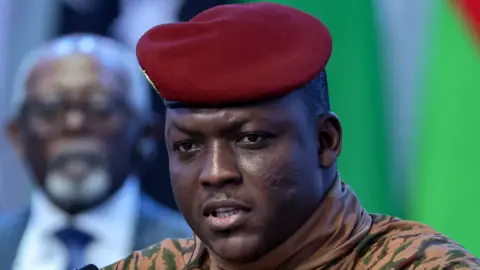
Junta leader Captain Ibrahim Traoré has been criticised for suppressing dissent and the move will be seen as the latest tightening of control.
According to Burkina Faso's Interior Minister Emile Zerbo, the ban is part of plans to rebuild the state after what he termed numerous abuses in the country's multiparty system.
Zerbo stated that the existing structure had been promoting division among citizens and weakening the social fabric.
While parties were previously barred from holding public gatherings, the new decree prohibits their operation entirely. The assets of the dissolved parties will be transferred to the state, with a draft law to be submitted to the Transitional Legislative Assembly imminently.
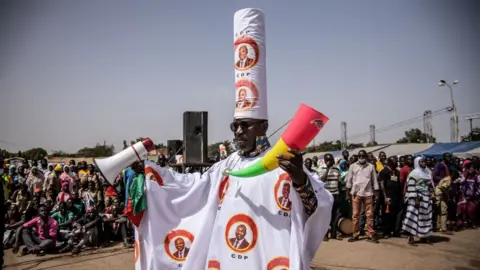
Prior to the coup, Burkina Faso boasted over 100 registered political parties, with 15 represented in parliament after the 2020 general election.
Critics argue that this ban will not lead the country towards progress. A civil society member remarked, We're not happy with this, suggesting that the regime is fostering the narrative that democracy is detrimental to Burkina Faso.
Supporters of the junta expressed agreement with the ban, claiming that a proliferation of parties had contributed to chaos and corruption.
This latest decree is part of a broader regional trend, as multiple West African nations have seen similar restrictions on political parties following coups in recent years. Burkina Faso's history of instability suggests that further shifts in power may lie ahead, despite Traoré's authoritarian ascent gaining him some following for his pan-Africanist stance and critique of Western influence.
As of now, the junta's commitment to restore civilian governance by July 2024 appears uncertain, with recent statements indicating an extension of military rule for an additional five years.