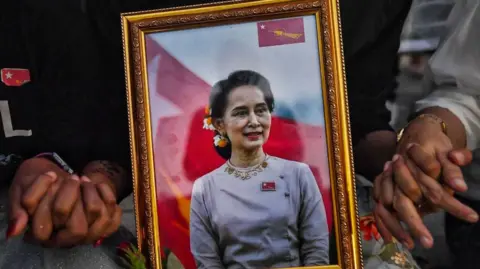
As of Wednesday, the Burmese democracy campaigner Aung San Suu Kyi will have spent a total of 20 years in detention in Myanmar, with the last five years following the military coup that overthrew her government in February 2021.
Details about her health and living conditions remain sparse, but the assumption is that she is held in a military prison in Nay Pyi Taw. Her son, Kim Aris, has voiced concerns about her well-being, stating, For all I know, she could be dead, although the ruling military junta insists that she is in good health.
Having not seen her lawyers for at least two years, Suu Kyi is primarily isolated from the outside world except for prison personnel. After the coup, she was handed jail sentences totaling 27 years, widely viewed as politically motivated charges.
Despite her absence from public life, Suu Kyi's presence remains a powerful symbol in Myanmar. There are ongoing calls for her release and appeals to the military leaders to negotiate an end to the civil war that has ravaged the country for five years.
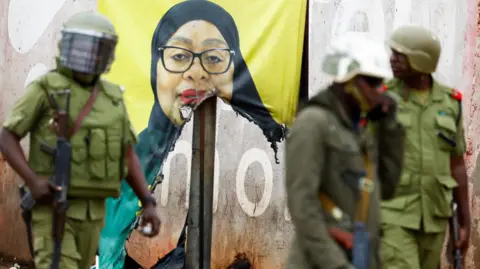
While the military has attempted to erase her image, remnants of her influence linger in the form of faded posters in hidden corners. Could Suu Kyi still play a role in achieving peace between the armed forces and the people of Myanmar?
Historically, in 2010, after almost 50 years of military rule, the regime organized a general election that excluded Suu Kyi's National League for Democracy party and ensured a win for its pro-military party. Yet the unexpected return of Suu Kyi to power just a year later marked a significant political shift.
Now, as another sham election is underway, questions arise regarding the potential for a similar turn of events. Several key transformations since her first release complicate the situation today, including increased violence from the military and a lack of reform-minded figures in leadership roles.
Contrasting her previous years of house arrest, the current conditions under which she is held appear much less accommodating. Her advocacy for non-violence has lost appeal among many who believe confrontation is now necessary to displace the military from power.
As opposition to her tenure grows—particularly concerning her handling of the Rohingya crisis—questions remain about whether Suu Kyi still holds significant sway in achieving Myanmar’s democratic aspirations.
At the age of 80, the uncertainty of her health adds layers to this dilemma. Yet, she symbolizes the hopes for a democratic future that many Burmese citizens continue to resonate with, underscoring her unmatched stature in the country’s political landscape.