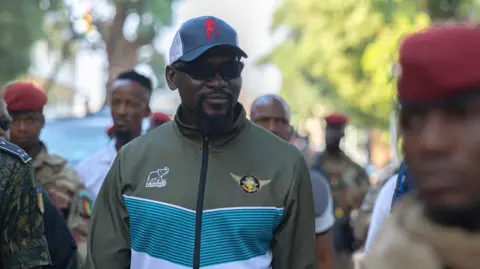
From the moment he seized power in September 2021, Guinea's Mamadi Doumbouya struck an imposing figure. Just 36 years old at the time, the broad-shouldered colonel, standing at well over six feet (1.8m), wore military fatigues and mirrored sunglasses. He criticized the ousted President Alpha Condé for disregarding democratic principles amidst allegations of citizen rights violations.
Now 41, Doumbouya is poised to take the oath as Guinea's elected president on Saturday, following a victory where he secured 87% of the vote against a weakened opposition. The process faced accusations of being a “charade” from ex-Prime Minister Cellou Dalein Diallo, who is now in exile.
Despite some popular support, Doumbouya's tenure has come under fire due to the banning of political parties, the disappearance of activists, and censorship of media outlets.
In recent months, Doumbouya has endeavored to reshape his public image, opting for civilian attire over military garb, signifying a transition towards a leader more in tune with the populace. Analysts note this change could be an attempt to distance himself from the military roots of his rule, although skepticism remains about the sincerity of this transformation.
Moreover, his administration has emphasized national sovereignty and the exploitation of Guinea's rich natural resources, particularly the Simandou iron-ore mine, which could potentially enhance the nation's economy if managed correctly.
However, questions linger about Doumbouya's political ideology and the effectiveness of his governance. The upcoming period will be critical as he faces the twin challenges of maintaining his political standing and addressing the legitimate needs of a country struggling with high poverty rates despite its vast resources.
As Doumbouya prepares to assume office, the eyes of the nation will be on him, with a hope that his presidency will mark the beginning of a new chapter in Guinea’s political landscape.