Myanmar has denied committing genocide against the Rohingya people, stating that The Gambia has failed to provide adequate proof as it began its defense at the UN's top court. Ko Ko Hlaing, a representative of the Myanmar government, told judges at the International Court of Justice (ICJ) that the allegations were 'unsubstantiated'. Earlier, The Gambia's foreign minister, Dawda Jallow, asserted that Myanmar sought to erase the minority Muslim population through 'genocidal policies'.
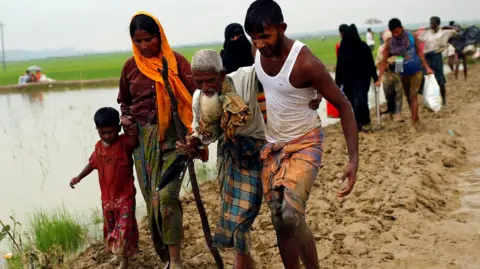
Thousands of Rohingya were killed, and over 700,000 fled to neighboring Bangladesh during the military crackdown in 2017. A damning UN report released the following year indicated that top military figures in Myanmar should be investigated for genocide in Rakhine state and crimes against humanity elsewhere.
Myanmar, which has been under military control since the coup in 2021, rejected the UN findings and insisted its operations were aimed at insurgent threats. Hlaing maintained that 'Myanmar was not obliged to remain idle' while facing terrorist threats in Rakhine state.
The Gambia launched its case against Myanmar in 2019, motivated by its own past with military oppression. It argued that the Rohingya suffered decades of dire persecution, culminating in the military crackdown characterized by horrific violence against civilians.
In his arguments for The Gambia, lawyer Philippe Sands claimed Myanmar's actions exhibited a clear genocidal intent and emphasized the significant impact a genocide ruling would have on Myanmar's international reputation.
The court will also hold sessions to hear witness accounts from Rohingya survivors, which will be closed to the public and media. A final ruling is expected towards the end of 2026 and could set a precedent for other genocide cases globally.
Thousands of Rohingya were killed, and over 700,000 fled to neighboring Bangladesh during the military crackdown in 2017. A damning UN report released the following year indicated that top military figures in Myanmar should be investigated for genocide in Rakhine state and crimes against humanity elsewhere.
Myanmar, which has been under military control since the coup in 2021, rejected the UN findings and insisted its operations were aimed at insurgent threats. Hlaing maintained that 'Myanmar was not obliged to remain idle' while facing terrorist threats in Rakhine state.
The Gambia launched its case against Myanmar in 2019, motivated by its own past with military oppression. It argued that the Rohingya suffered decades of dire persecution, culminating in the military crackdown characterized by horrific violence against civilians.
In his arguments for The Gambia, lawyer Philippe Sands claimed Myanmar's actions exhibited a clear genocidal intent and emphasized the significant impact a genocide ruling would have on Myanmar's international reputation.
The court will also hold sessions to hear witness accounts from Rohingya survivors, which will be closed to the public and media. A final ruling is expected towards the end of 2026 and could set a precedent for other genocide cases globally.