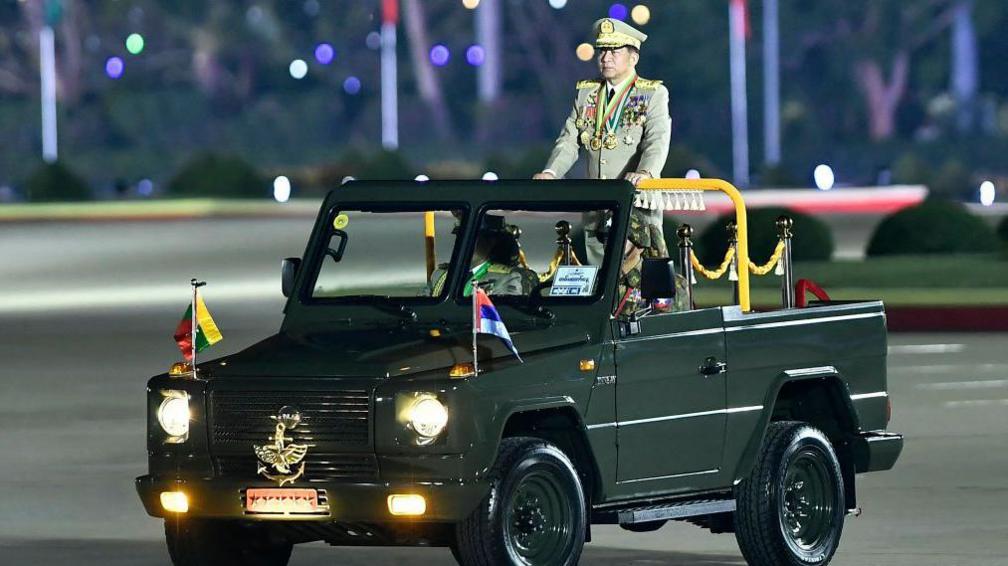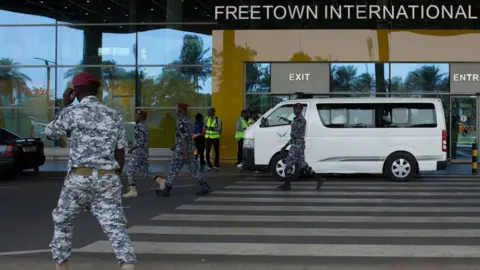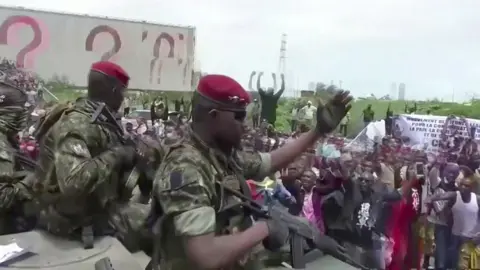
From the moment he seized power in September 2021, Guinea's Mamadi Doumbouya struck an imposing figure. Just 36 years old at the time, the broad-shouldered colonel, standing at over six feet (1.8m), in military fatigues and a red beret, made a strong impression when announcing the coup. A relatively unknown member of an elite army unit, he declared that the government of ousted President Alpha Condé had disregarded democratic principles and that citizens' rights were being trampled.
After more than four years of serving as interim president and reversing a promise not to pursue the leadership of the country, Doumbouya, now aged 41, is set to be sworn in as the elected head of state on Saturday. He received 87% of the vote in December's election against a weakened opposition. Critics, including ex-Prime Minister Cellou Dalein Diallo, now in exile, characterized the electoral process as a sham generating 'fabricated' results.
Though Doumbouya appears to enjoy some popular support, skepticism about his democratic credentials persists. Many political parties have been banned, activists have mysteriously disappeared, and media outlets have been shut down.
Doumbouya, having chosen to adopt a more civilian image, has largely replaced military uniforms with tracksuits and traditional Guinean attire. Images posted by his presidency show him engaged in various civic activities, cultivating an image of a leader closely connected with the population.
Some analysts remain dubious about the sincerity of Doumbouya's transition from military to civilian leader, citing political crackdowns and the silencing of dissent. Reports exist of activists going missing under suspicious circumstances, raising alarms among human rights groups about the state of freedom and security in Guinea.
Despite these criticisms, Doumbouya remains a popular figure since the coup, with surveys showing increasing public trust in his leadership. His presidency will likely hinge on the successful management of Guinea's vast natural resources, particularly the newly accessible iron-ore reserves, as he promotes a message of sovereignty and local empowerment in his official communications. The situation in Guinea continues to develop as he prepares to lead a nation facing challenges rooted in both its history and material wealth.
After more than four years of serving as interim president and reversing a promise not to pursue the leadership of the country, Doumbouya, now aged 41, is set to be sworn in as the elected head of state on Saturday. He received 87% of the vote in December's election against a weakened opposition. Critics, including ex-Prime Minister Cellou Dalein Diallo, now in exile, characterized the electoral process as a sham generating 'fabricated' results.
Though Doumbouya appears to enjoy some popular support, skepticism about his democratic credentials persists. Many political parties have been banned, activists have mysteriously disappeared, and media outlets have been shut down.
Doumbouya, having chosen to adopt a more civilian image, has largely replaced military uniforms with tracksuits and traditional Guinean attire. Images posted by his presidency show him engaged in various civic activities, cultivating an image of a leader closely connected with the population.
Some analysts remain dubious about the sincerity of Doumbouya's transition from military to civilian leader, citing political crackdowns and the silencing of dissent. Reports exist of activists going missing under suspicious circumstances, raising alarms among human rights groups about the state of freedom and security in Guinea.
Despite these criticisms, Doumbouya remains a popular figure since the coup, with surveys showing increasing public trust in his leadership. His presidency will likely hinge on the successful management of Guinea's vast natural resources, particularly the newly accessible iron-ore reserves, as he promotes a message of sovereignty and local empowerment in his official communications. The situation in Guinea continues to develop as he prepares to lead a nation facing challenges rooted in both its history and material wealth.