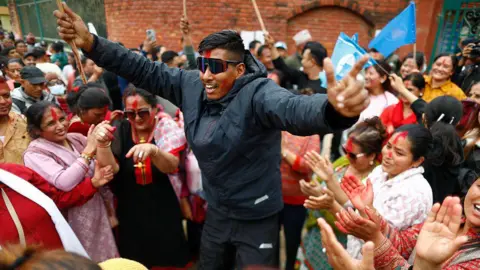
Just over two years ago, when Sheikh Hasina won an election widely condemned as rigged in her favour, it was hard to imagine her 15-year grip on power being broken so suddenly, or that a rival party that had been virtually written off would make such a resounding comeback.
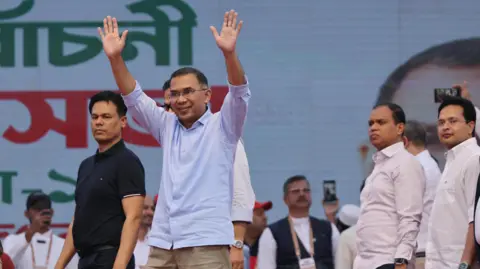
In the cycle of Bangladeshi politics, this is one more flip-flop between Hasina's Awami League and the Bangladesh Nationalist Party (BNP), which have alternated holding power for decades. Except this is the first time that new BNP leader Tarique Rahman is formally leading the party - and the first time he's contested an election.
His mother Khaleda Zia, who died of an illness late last year, was the party's head for four decades. She took over after his father, Ziaur Rahman, the BNP founder and a key leader of Bangladesh's war for independence, was assassinated.
Accused of benefitting from nepotism when his mother was in power, Tarique Rahman has also faced allegations of corruption. Five days before his mother died he returned to Bangladesh after 17 years of self-imposed exile in London.
And while Rahman, 60, has on occasion been the de-facto chair of an emaciated BNP when his mother was jailed and more recently when she was ill, he's largely seen as an untested leader.
Political scientist Navine Murshid states, That he doesn't have prior experience probably works for him, because people are willing to give change a chance. They want to think that new, good things are actually possible. So there is a lot of hope.
The party says its first priority is to bring democracy back to Bangladesh. All the democratic institutions [and] financial institutions, which have been destroyed over the last decade, we have to first put those back in order, senior BNP leader Amir Khasru Mahmud Chowdhury said shortly after the election was called.
However, history suggests these promises may fall short, with parties often becoming authoritarian once they gain power. Yet, after the 'July uprising' of 2024, where young voters ousted the previous administration, there is a palpable sense of urgency for genuine reform among the electorate. Youth activists like Tazin Ahmed insist their fight is not just against corruption but also for a stable and prosperous nation.
Compounding challenges for the new government includes addressing rising violence and tackling economic issues such as inflated food prices and unemployment among Bangladesh's youth.
The electoral landscape saw the Islamist party Jamaat-e-Islami and the newly formed National Citizens Party (NCP), both securing seats and highlighting an evolving political dynamic rarely seen before.
Overall, while Rahman’s leadership holds promise for a shift towards accountability and democracy, the skepticism rooted in Bangladesh's political history lingers, as observers watch closely to see if he can break the cycle of past failures.