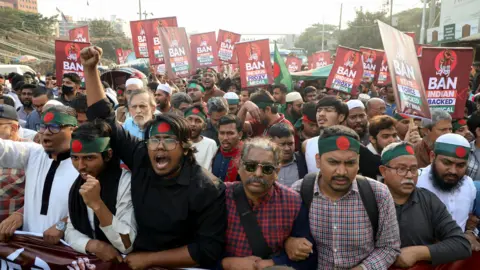
The walls of Dhaka University are vibrant with graffiti, echoing the sentiments of a new generation that is increasingly questioning the role of India in Bangladesh's politics. Many young people express frustration, feeling that India has meddled in their political landscape, particularly following the controversial elections of recent years. As the nation prepares for elections, which will be their first genuine chance to vote, the haunting slogans of 'Dhaka, not Delhi' resonate strongly.
Since the fall of Sheikh Hasina, former prime minister who took refuge in India, the public sentiment towards India has soured. Critics highlight India's backing of her increasingly authoritarian rule, intensifying perceptions that India prioritizes its strategic interests over Bangladesh's sovereignty. This perception is compounded by surface-level grievances regarding border incidents, trade issues, and cultural influences that many young people find unsatisfactory.
Experts note the chilling effect this anti-Indian sentiment is having on bilateral relations, which were once characterized by cooperation. As political figures and analysts navigate this complex terrain, a resounding theme emerges: the need for a thoughtful recalibration of relationships based on mutual respect, rather than reliance on favored political actors. Despite the challenges, advocates for a constructive path forward emphasize the enduring connections between the two nations, founded on shared history and cultural ties.
Since the fall of Sheikh Hasina, former prime minister who took refuge in India, the public sentiment towards India has soured. Critics highlight India's backing of her increasingly authoritarian rule, intensifying perceptions that India prioritizes its strategic interests over Bangladesh's sovereignty. This perception is compounded by surface-level grievances regarding border incidents, trade issues, and cultural influences that many young people find unsatisfactory.
Experts note the chilling effect this anti-Indian sentiment is having on bilateral relations, which were once characterized by cooperation. As political figures and analysts navigate this complex terrain, a resounding theme emerges: the need for a thoughtful recalibration of relationships based on mutual respect, rather than reliance on favored political actors. Despite the challenges, advocates for a constructive path forward emphasize the enduring connections between the two nations, founded on shared history and cultural ties.