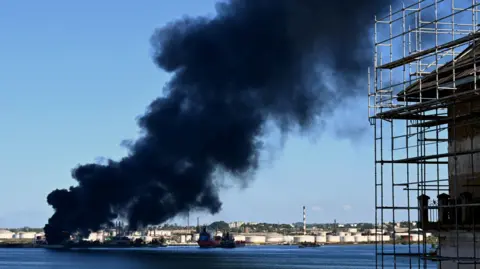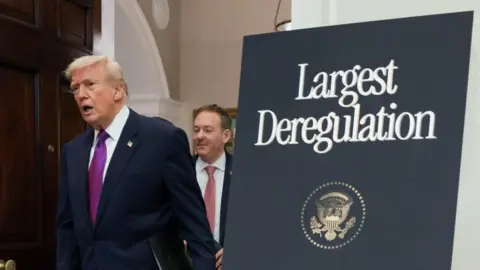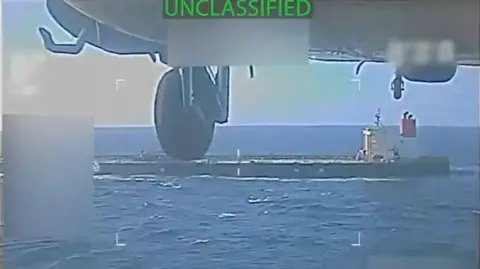
In a move reflecting escalating tensions between the United States and Venezuela, President Donald Trump has instituted a naval blockade aimed at preventing sanctioned oil tankers from entering or exiting the South American nation. Given its heavy reliance on oil revenues, Venezuela, home to the world's largest proven oil reserves, is turning to a network of 'ghost ships' to circumvent these restrictions.
Recent data indicates that as of last week, over 30 of the 80 ships in Venezuelan waters were under U.S. sanctions. This prompted Trump to declare a 'total and complete blockade' on all sanctioned oil tankers, underscoring the seriousness of the situation.
Despite ongoing sanctions since 2019 that have significantly hampered Venezuela's crude oil exports — which plummeted from approximately 1.1 million barrels per day to about 495,000 — there has been a partial recovery. As of November, exports have reportedly increased to around 920,000 barrels per day, showcasing the country’s resilience and ingenuity in navigating the sanctions.
Venezuela's reliance on ghost ships isn't unique; similar tactics are employed by other sanctioned nations such as Russia and Iran, with reports suggesting that about 20% of global oil tankers are involved in smuggling operations. These ships frequently change names and flags to evade tracking, and some even adopt the identities of scrapped vessels, making them akin to 'zombie ships.'
Strategies employed by these vessels include disabling tracking systems and engaging in ship-to-ship cargo transfers in international waters to disguise the origin of the crude oil. The emergence of ghost fleets presents complex challenges for international oil markets and regulatory authorities, suggesting that sanction efforts alone may not effectively deter oil trade with these countries.
As global scrutiny intensifies and the threat of increased military oversight looms, the future of Venezuela’s ghost fleet remains uncertain. Ultimately, how this situation unfolds could have lasting impacts on geopolitical relations and the global oil supply chain.