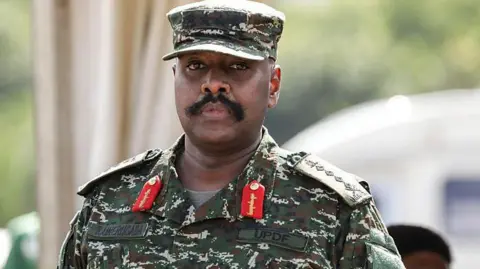
A fiery tweeter who is in charge of Uganda's military, Gen Muhoozi Kainerugaba is decried by his critics as being in the middle of an unholy trinity, or alliance, of three men who rule the East African nation with an iron fist.
Kainerugaba, the son of the country's long-time leader Yoweri Museveni, has posted on social platform X about the killing of opposition supporters during this month's fiercely contested presidential election.
In posts which were subsequently deleted, he also threatened to have the testicles of defeated opposition candidate Bobi Wine removed.
With the 81-year-old president winning a seventh term, analysts say this is likely to be his last term and he is grooming his 51-year-son to succeed him.
The so-called unholy alliance - a play on the Christian doctrine of the Holy Trinity - is made up of Museveni, Kainerugaba, and the president's powerful brother and special adviser, Salim Saleh.
Kenya-based analyst for the Institute for Security Studies think-tank, Nicodemus Minde, describes this dynamic as akin to a familial hierarchy where Museveni plays the Father, Muhoozi the Son, and Saleh the Unholy Spirit.
Opposition supporters accuse the family of believing they have a God-given right to rule Uganda, further highlighting the concerning political landscape post-election, characterized by repression and intimidation towards dissenters.
After election results showed Wine receiving just 24% of the vote amidst claims of ballot-stuffing, Kainerugaba escalated tensions by issuing threats against the opposition leader, demanding his submission to authorities.
Notably, Kainerugaba has a history of incendiary posts and controversial behavior, claiming lineage from Jesus Christ and indicating a future political ambition with statements that seemingly blend religious mythology with his aspirations.
As the general faces increasing scrutiny and international backlash, including a denial of human rights violations and threats to suspend military cooperation with the United States, his statements and actions will be central in defining Uganda's political future and stability.