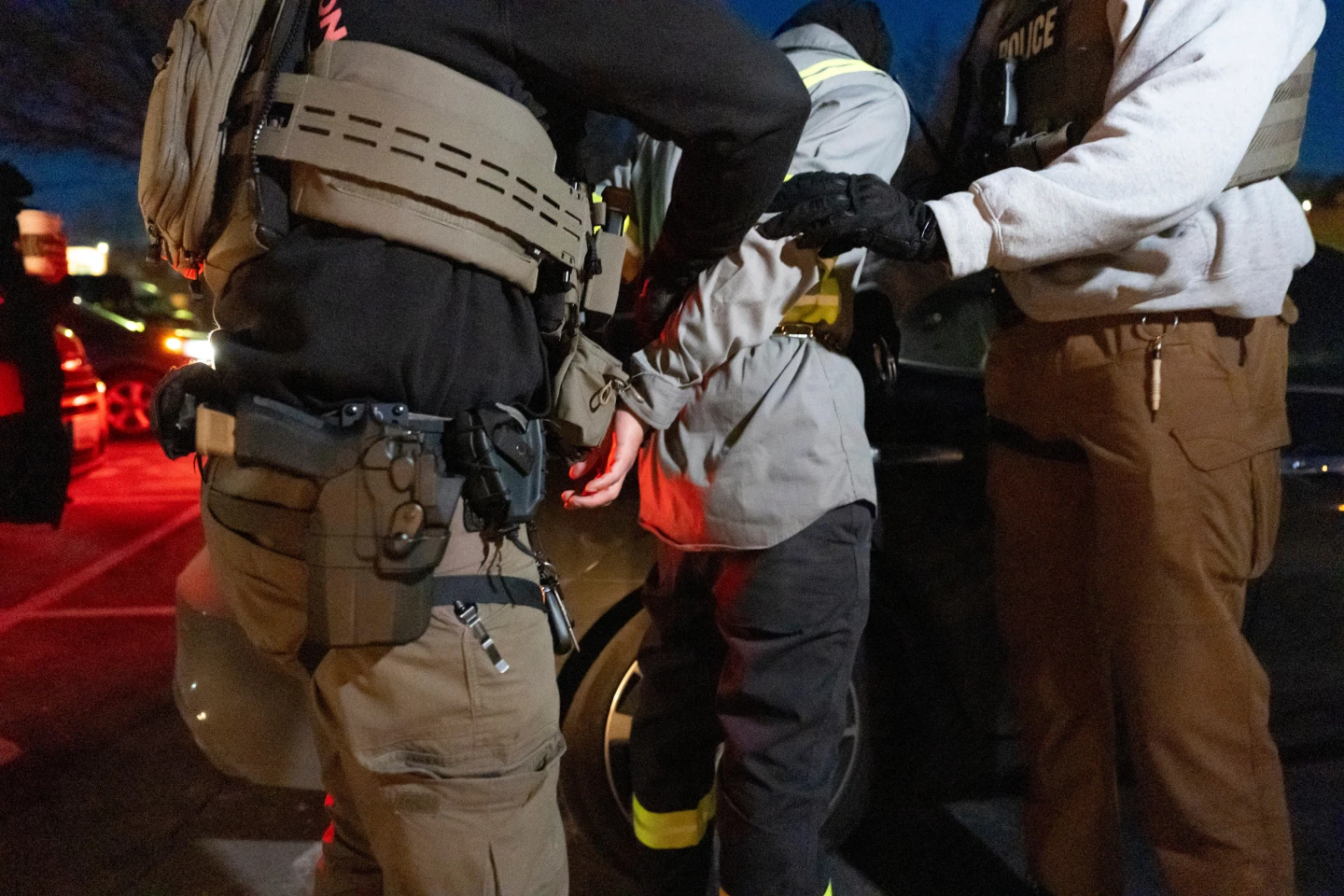
MINNEAPOLIS (AP) — The arrival of federal immigration officers at a hospital in Minneapolis with an injured Mexican immigrant raised alarms among ICU nurses, resulting in questions around the legitimacy of federal accounts regarding the injuries sustained by the patient.
Alberto Castañeda Mondragón, who suffered grave injuries, led hospital staff to scrutinize claims from Immigration and Customs Enforcement (ICE) that he had attempted to flee by running headfirst into a wall. Medical personnel asserted that such injuries were inconsistent with the ICE description, noting extensive damage to the man’s skull and brain.
One anonymous nurse highlighted the absurdity of ICE's claim: ‘There was no way this person ran headfirst into a wall.’ The apprehension between immigration enforcement and healthcare practitioners at Hennepin County Medical Center (HCMC) has escalated, with reports of agents lingering near patients as they sought treatment.
Since the commencement of President Trump’s Operation Metro Surge, ICE's operations have become commonplace at local hospitals, prompting new protocols on how to interact with immigration officers. Hospital administrators have received complaints from employees who claim they’ve experienced intimidation tactics from agents, often hesitating to cross paths with them while on duty.
As noted in court documents, the inconsistencies in ICE's explanations regarding Mondragón’s injuries evolved, undermining their credibility. Following his arrest, Mondragón was taken to an ICE facility before being transferred to the hospital, where CT scans revealed multiple skull fractures and serious internal bleeding. His condition reportedly devolved from initially responsive to a minimally reactive state.
Medical experts examining Mondragón’s case were astounded by the severity of his injuries, deeming ICE's narrative far-fetched. Dr. Lindsey C. Thomas, a former medical examiner, commented, ‘I am pretty sure a person could not get these kinds of extensive injuries from running into a wall.’
As tension heightened, hospital staff confronted ICE's insistence on shackling Mondragón to his hospital bed, leading to heated exchanges. Hospital representatives stated that federal entities should respect medical procedures and patient rights. In reaction to the recent spike in ICE engagements, many nurses reported increasing anxiety and altered communication methods to protect sensitive conversations.
On January 16, a U.S. District Court judge ruled for Mondragón’s release from ICE custody, reaffirming the necessity for understanding legal protections in healthcare settings. His condition has left him with profound cognitive loss and a difficult path to recovery, raising urgent discussions on the ethical implications of immigration enforcement in vulnerable circumstances.
It’s sad that instead of having good memories of the United States, you’re left with a bad taste in your mouth about that country because they’re treating them like animals, remarked Mondragón’s brother regarding his sibling's ordeal.