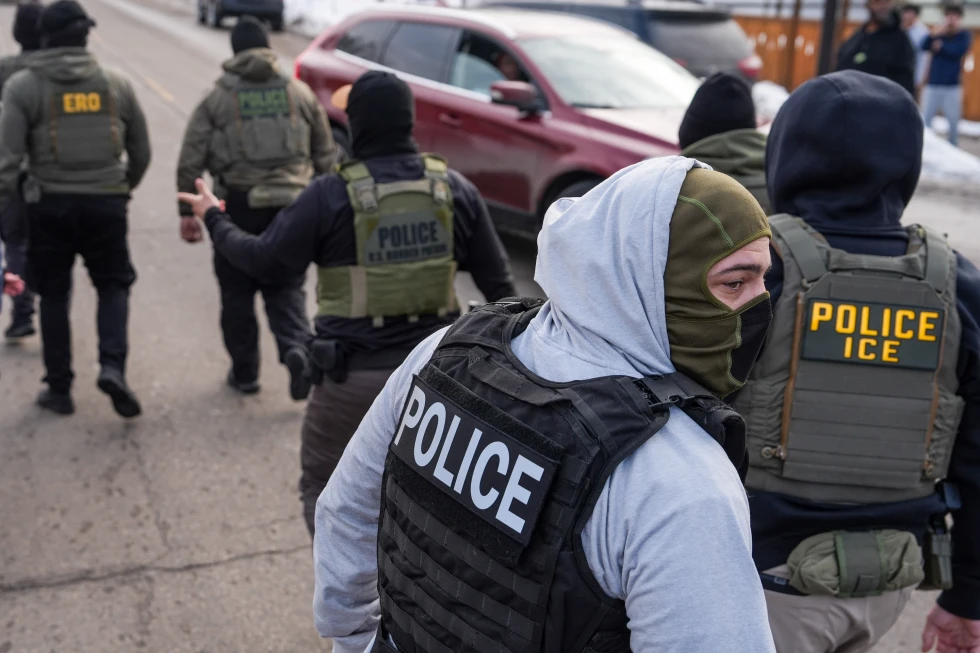
As Congress navigates the complexities of funding for Homeland Security, the contentious issue of federal immigration agents wearing masks has emerged as a flashpoint in the ongoing immigration enforcement debate under the Trump administration. This shift toward masked officers has raised alarms among advocates and members of Congress regarding the implications for community trust and accountability.
Supporters of the masking policy argue that it protects federal agents from online harassment and potentially violent retaliation from those opposed to their enforcement actions. Yet, critics assert that such practices intimidate communities and create an atmosphere of distrust toward law enforcement. The visibility of masked officers conducting operations in cities across America has sparked renewed discussions around transparency, with many calling for an end to this practice.
The phrase Cameras on, masks off has become a rallying cry for Democrats advocating for greater accountability in immigration enforcement. House Democratic Leader Hakeem Jeffries emphasized that addressing the issue of masked federal agents is a non-negotiable point in funding negotiations ahead of a looming deadline.
In stark contrast, many Republicans highlight the risks posed to newly minted immigration officers if they are required to reveal their identities. Republican Senator Thom Tillis pointed out that exposure could lead to threats against officers' families, underscoring a significant division within Congress on how to handle immigration enforcement policies.
Unlike other law enforcement agencies that typically reserve masks for undercover or special operations, ICE’s widespread application of masks during immigration enforcement activities appears unprecedented in modern American law. Naureen Shah from the ACLU characterized this practice as a calculated tactic aimed at invoking terror among immigrants and communities.
With the impending funding discussions approaching, advocates for change are not only demanding unmasking but also calling for a reconsideration of the policies that enable aggressive immigration practices, including curtailing the ability of ICE officers to enter homes without a judicial warrant.
As the debate continues, the balance between safety, accountability, and community relationships remains a focal point, revealing the complexities surrounding immigration enforcement in the United States today.