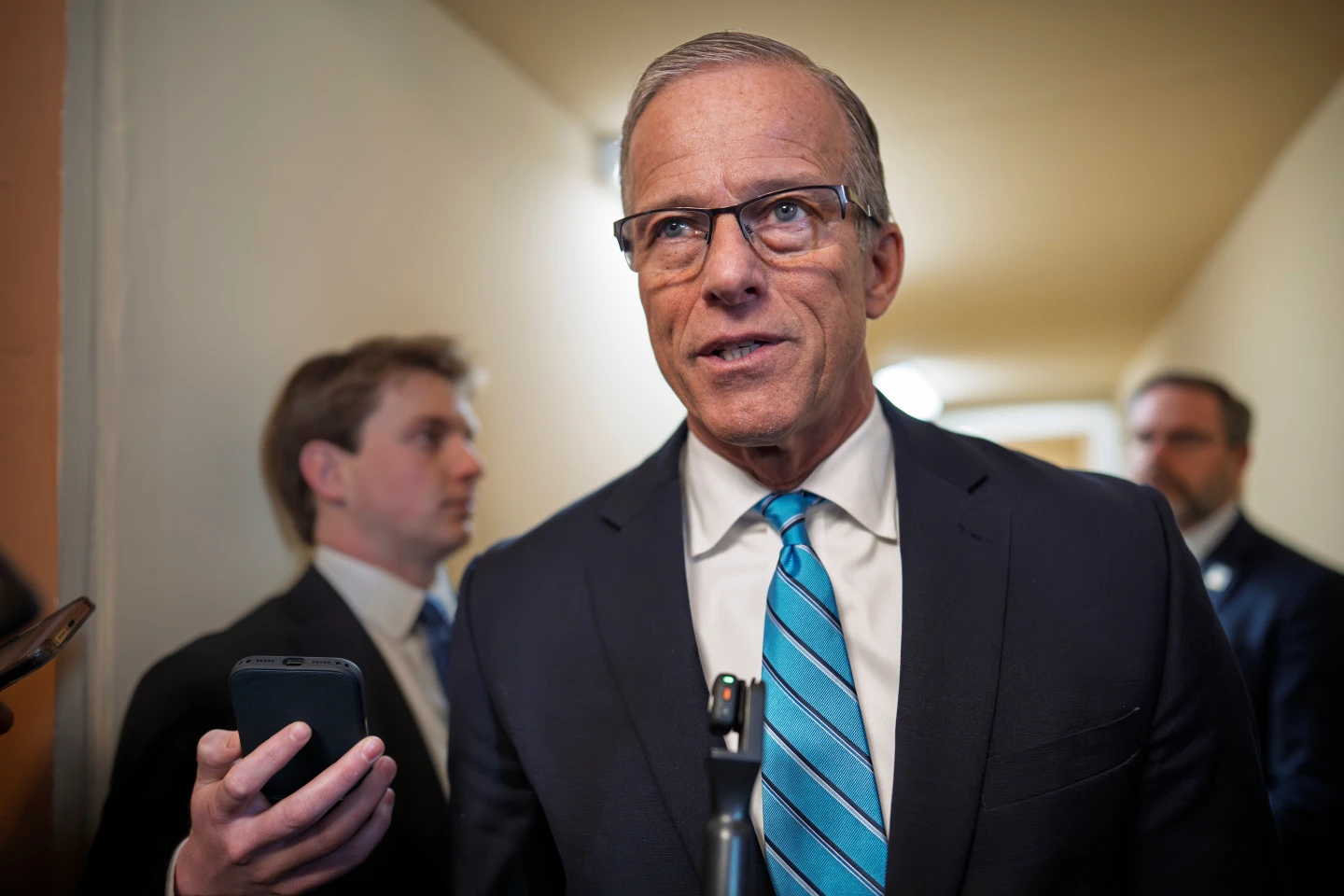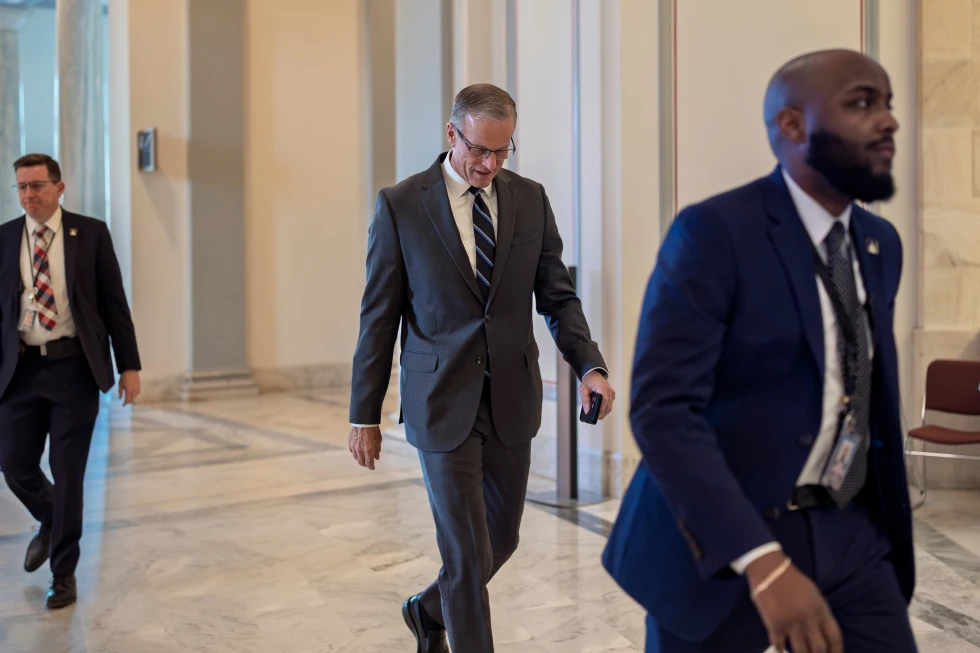
WASHINGTON (AP) — Senate Majority Leader John Thune expressed serious concern on Thursday regarding the demands made by Democratic leaders for new restrictions on federal immigration enforcement. He labeled these requests as unrealistic, adding that the Department of Homeland Security could face a shutdown if Democrats do not collaborate with Republicans and the White House in the negotiations.
Democrats' refusal to endorse the DHS spending bill hinges on changes to federal immigration practices, particularly following the fatal shootings of two protesters in Minneapolis last month. Key Democratic figures such as Sen. Chuck Schumer and Rep. Hakeem Jeffries are advocating for a comprehensive list of ten proposals that include judicial warrants for detention, enhanced identification standards for DHS officers, revised use of force protocols, and strict prohibitions against racial profiling.
Thune commented that these demands were very unrealistic and stressed that meaningful reforms to immigration enforcement could only be achieved through constructive bipartisan negotiations. He stated, This is not a blank check situation where Republicans just agree to a list of Democrat demands.
In response to Thune's remarks, Schumer argued that such statements trivialized critical issues regarding public rights and safety. He insisted that if Republicans disagreed with their proposals, they should clarify their stance instead of dismissing them as politically motivated.
As discussions continue with a deadline approaching on February 14, the risks of a DHS shutdown are becoming more pronounced. Thune noted that there is currently no agreement in sight, warning that a funding lapse might lead to disruptions similar to last year's 43-day government closure.
Furthermore, the list of Democratic demands not only emphasizes changes within ICE and Customs and Border Protection but also touches on several other departments under DHS, including FEMA and TSA, showcasing their broader implications on national safety and security operations.
While Democrats stress the necessity for reform in light of recent civil rights crises, Republicans have rebuffed these suggestions as extreme and politically charged. Senate leaders like John Barrasso and Katie Britt have criticized the Democrats' reform agenda as a radical wish list, arguing it undermines meaningful negotiations.
As both parties grapple with their positions, solutions proposed by other members include a limited approach to fund certain DHS departments independent of the immigration enforcement reforms, showcasing the ongoing complexities of the evolving negotiations.