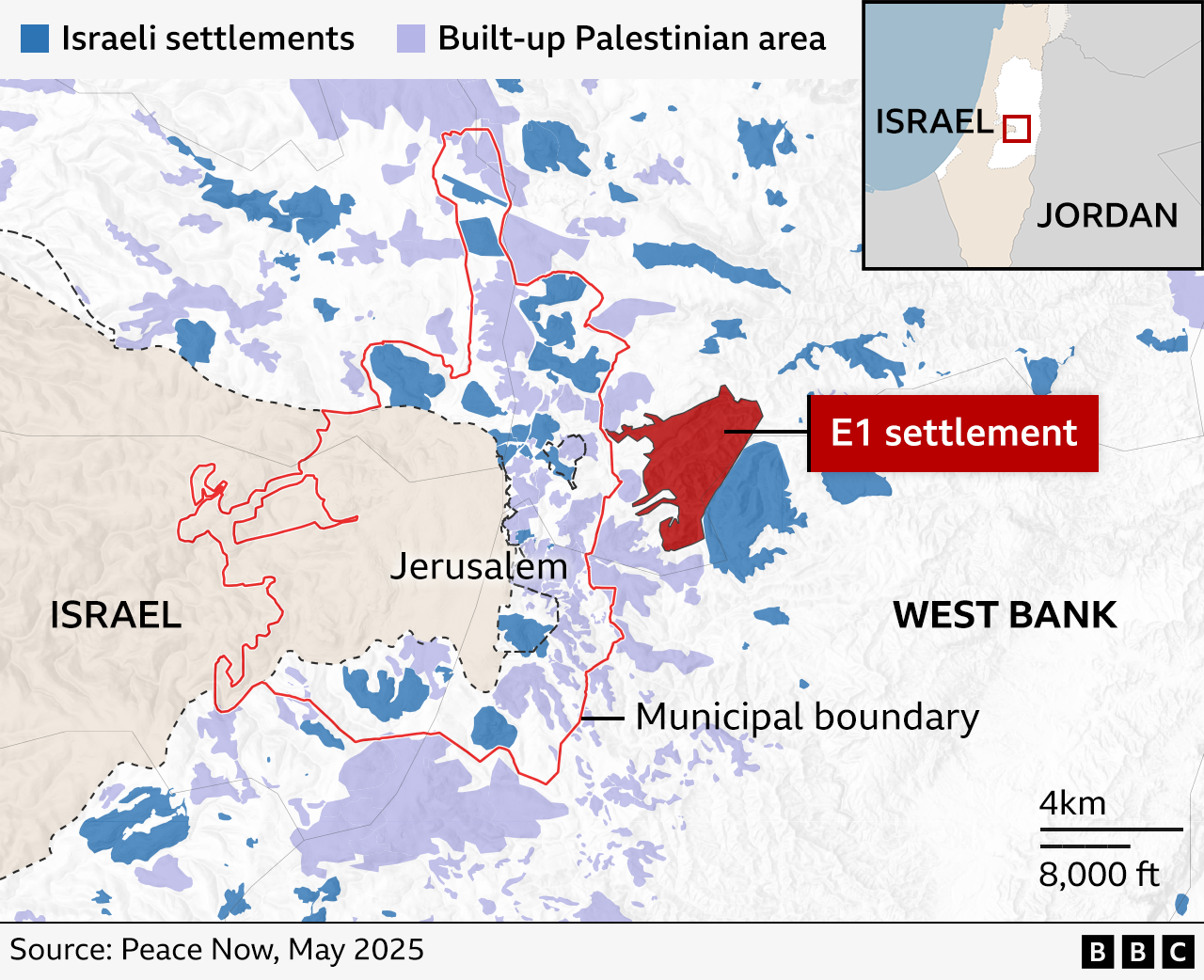
In a ceremony at a West Bank settlement last September, Israel’s Prime Minister Benjamin Netanyahu announced a plan to build 1,200 new homes in the contested E1 area east of Jerusalem. He framed the move as fulfilling a promise that a Palestinian state would not exist and that the land “belongs to us.”
The tender for the new houses has sparked swift condemnation. The United Nations Secretary‑General described the project as an existential threat to a future Palestinian state, while a joint statement from the United Kingdom, France, Germany, Italy and Canada called the plan “unacceptable” and warned it would drive a wedge through the West Bank.
The Palestinian Authority’s president, Mahmoud Abbas, urged the signatories to halt the E1 plan, a move that echoes the broader international stance that Israeli settlements violate the Fourth Geneva Convention and should be halted.”
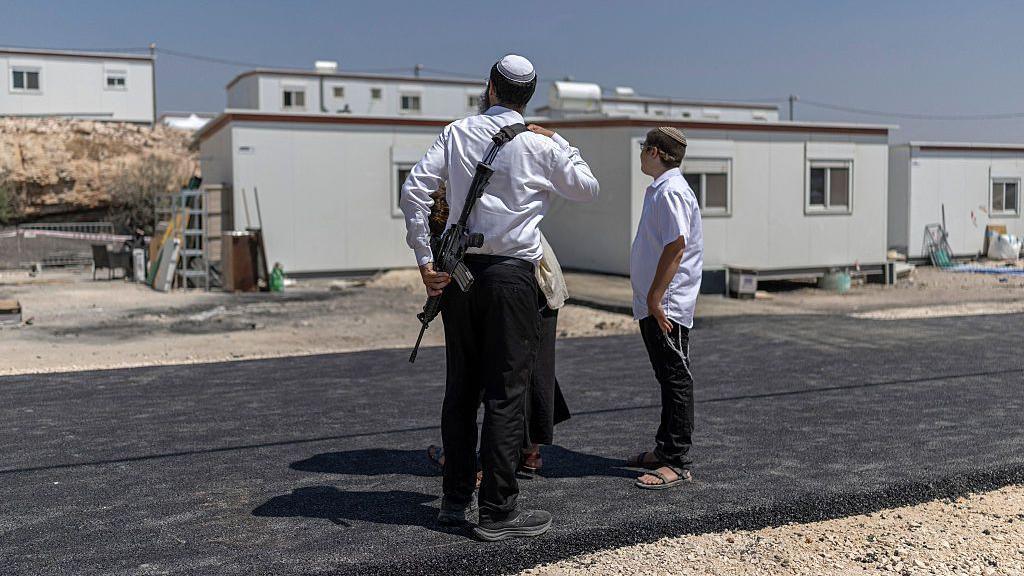
Since the 1967 war, Israel has controlled the West Bank and built around 160 settlements housing roughly 700,000 Jews. The number of settlements has grown rapidly between 2022 and 2026, aided by a new government‑led strategy that has accelerated construction, especially in northern outposts like Tzofim, where 185 new buildings were documented by satellite imagery.
Concomitant road-building projects further tighten Israeli control. In May 2024, the government announced more than a billion shekels in funding to pave new roads that link settlements and cut through Palestinian towns, “ensuring that the settlements will not remain on paper but will be established on the ground.”
Settler violence has also intensified. Two Palestinian homes were cut off from water and electricity as part of a violent encroachment; even U.S. Ambassador Mike Huckabee, a typically pro‑settlement figure, denounced the attack as a “criminal and terrorist act.”
Senior Israeli ministers have framed the expansion as a deliberate strategy to create “facts on the ground” that will make the establishment of a Palestinian state impossible. Finance Minister Bezalel Smotrich said in 2024 that the construction of E1 would “help establish sovereignty in Judea and Samaria, first on the ground and then through legislation… My life’s mission is to thwart the establishment of a Palestinian state.”
The announcement comes just months before highly contested elections, suggesting that the Netanyahu coalition hopes the settlement push will galvanise their base and cement the political realities that cannot be undone. The Israeli stance, coupled with the growing infrastructure and increasing settlement density, signals a hard‑line approach to the West Bank that keeps international law at bay and deepens the call for a two‑state solution.