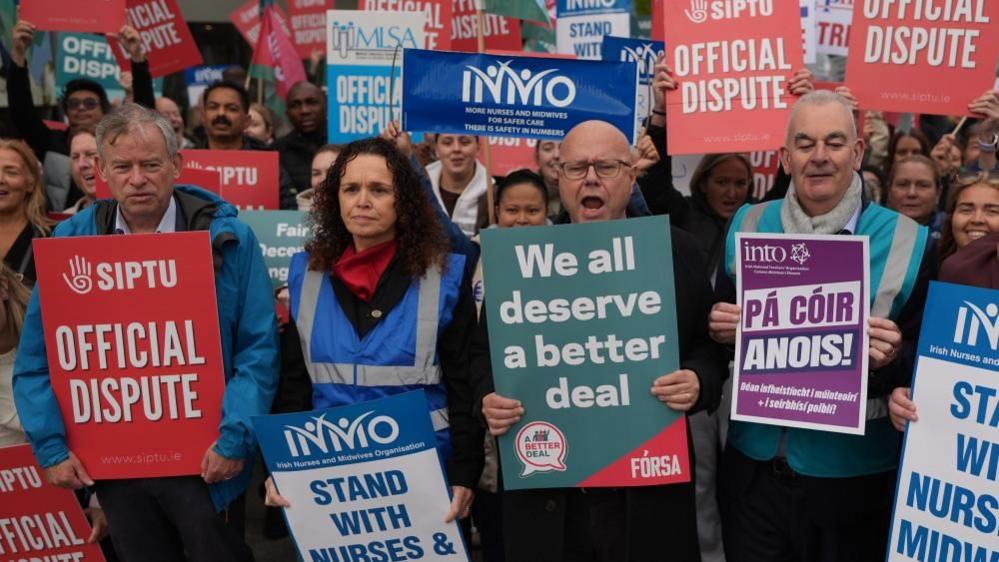
Hundreds of thousands of workers are on strike across the Republic of Ireland, stretching from nurses and doctors to school teachers and civil servants. The strike, set to last 24 hours, comes amid a stalled public‑sector pay dispute with the Irish government and is followed by a planned walkout on the 21st of October.
The strike foresees schools shutting down, hospital appointments being cancelled and picket lines forming throughout the country. Earlier this month, over 100,000 workers left the workplace in work‑to‑rule solidarity actions, a move that only magnified tensions as negotiations failed to take shape.
SIPTU divisional organiser Brendan O’Brien said the good will of workers had kept public services running, but highlighted that the government’s failure to set up formal talks left unions with no alternative but collective action. He warned that workers were not being treated fairly and that the pause in negotiations was a major squeeze on public welfare.
Jack Chambers, the Republic’s minister for expenditure, described the strike as "deeply disappointing" and warned of severe disruption to the economy, stressing that thousands of hospital appointments would be cancelled and schools would close.
Teacher unions speak of “unfeasible” wages, with frontline teachers like Dawn Hutchings‑Walsh saying the pay cannot stretch as it used to and that letting go for decades has become a necessity for many. Historian statements from the Association of Secondary Teachers in Ireland (ASTI) mirrored this sentiment, with General Secretary Linda Kelly calling the government’s laissez‑faire approach a major disappointment and claiming it has sat on its hands for too long.
This mass strike marks the Republic’s biggest public‑service union action, with Fórsa, the nation’s largest public‑sector union, securing almost 97 % support from its members in an industrial ballot for action.
The protest continues with picket lines outside Leinster House and the front of hospitals, illustrating the widespread frustration across all sectors of the public workforce.