RALEIGH, N.C. (AP) — North Carolina’s photo voter identification law was upheld on Thursday, as a federal judge set aside arguments by civil rights groups that Republicans enacted the requirement with discriminatory intent against Black and Latino voters.
The decision by U.S. District Judge Loretta Biggs is a huge legal victory for Republican legislative leaders who passed the law in late 2018 — weeks after voters approved a constitutional amendment backing the idea.
North Carolina state Senate leader Phil Berger said in a news release that with Biggs’ decision, “we can put to rest any doubt that our state’s Voter I.D. law is constitutional.”
Biggs presided over a non-jury trial in a lawsuit filed by the state NAACP and local chapters, which argued that the ID requirement violated the U.S. Constitution and the federal Voting Rights Act. At trial, the NAACP alleged Republican legislators passed the voter ID law to entrench their political power by discouraging people historically aligned with Democrats from voting.
Lawyers for Republican lawmakers helping defend the law with state attorneys argued that Republicans wouldn’t have passed one of the most permissive voter ID laws among states if they wanted to manipulate state politics. They asserted the law is race-neutral and includes more qualifying ID categories than a previous 2013 voter ID law that was struck down.
The lawyers also maintained that the General Assembly had legitimate state interests in building voter confidence and preventing voter fraud, even though nationwide voter identity fraud is rare.
State NAACP President Deborah Dicks Maxwell called Thursday’s decision “deeply disappointing and ignores the real and documented barriers” that voter ID laws have on certain voters. No decision has been made on whether to appeal the ruling.
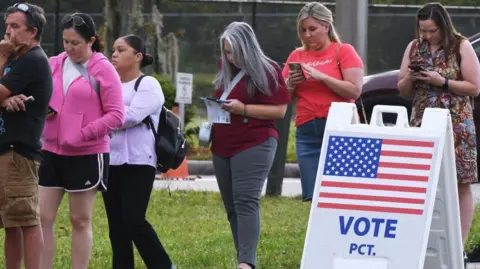
Even with the ongoing federal litigation, the 2018 voter ID law has been implemented since the 2023 municipal elections, following a state Supreme Court ruling that upheld the law. The March 3 primary results were largely certified on Wednesday.
In her 134-page decision, Biggs acknowledged that while the burden to obtain IDs disproportionately impacts Black and Hispanic voters, a precedent set by past court rulings required her to perceive the law as having been enacted in good faith.
Historically, North Carolina has struggled with issues of race discrimination and voter suppression; nevertheless, invoking past conduct of the General Assembly weighed less in the context of this ruling.
North Carolina law provides free ID cards at county election offices statewide. Voters lacking ID who fill out an exception form will still have their votes counted, provided they present their ID by the election’s final certification.
Thirty-six states in the U.S. have laws requesting or mandating identification at the polls, 23 of which require photo ID, statistics reveal, reflecting a nationwide trend of stricter voting measures.