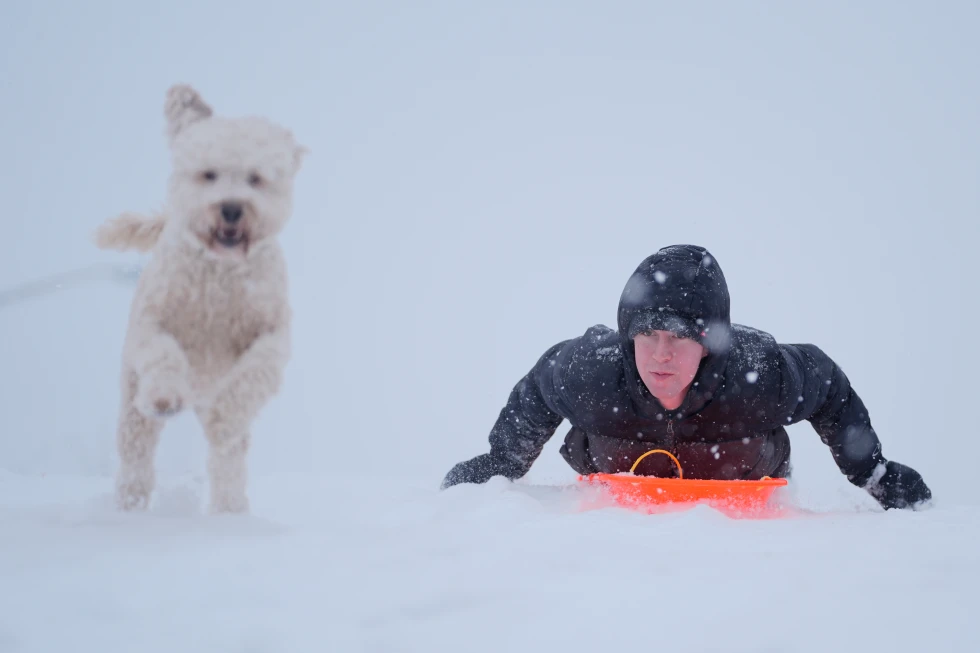
MEMPHIS, Tenn. (AP) — A massive cold wave has gripped a substantial portion of the U.S., stretching from the Gulf Coast to New England, bringing with it severe winter weather including snow and bitterly cold temperatures. This dramatic change in weather follows the passage of a bomb cyclone that resulted in significant snowfall and caused considerable disruptions, including hundreds of canceled flights.
As of Sunday, around 150 million Americans were under cold weather advisories and extreme cold warnings, with temperatures plunging to the single digits and wind chills nearing zero in southern states. In South Florida, locals experienced some of the coldest temperatures since December 1989, with reports of snow flurries and frigid conditions causing iguanas to fall from trees.
The bomb cyclone notably dumped nearly a foot of snow in Charlotte, North Carolina, creating one of the top snowfall events in the city's history. In addition to the snow, the storm's impact has been felt on the aviation front with over 2,800 flight cancellations reported on Saturday and another 1,500 on Sunday, significantly affecting operations at Charlotte Douglas International Airport.
The aftermath of the storm has also wreaked havoc on road conditions, resulting in numerous accidents including a severe pile-up on Interstate 85, leading to multiple traffic disruptions. Reports indicated over 1,000 traffic collisions and at least two fatalities in North Carolina attributed to the weather.
As the freeze grips the southern states, power outages remain a significant concern, with more than 97,000 customers still without electricity as of Sunday in Tennessee and Mississippi. States have opened warming shelters and initiated emergency responses as recovery efforts continue amidst anticipated further winter weather. Governor Bill Lee of Tennessee expressed his concerns regarding the power restoration efforts, which are expected to take several days as utilities work to restore services.
As the U.S. endures this unusual winter episode, meteorologists predict that many areas, particularly in the Carolinas, will be in recovery mode for several days. Looking ahead, light snowfall may also affect regions across the Ohio Valley and the mid-Atlantic, potentially bringing additional winter challenges to affected areas.