Socialists and allies held on to power in France's big four cities - Paris, Marseille, Lyon, and Lille - on a local election night that offered hopes for mainstream parties in next year's presidential elections.
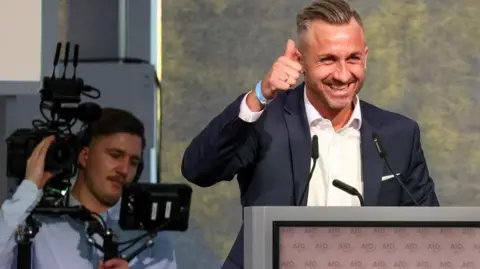
The new aspirants of the far-left and far-right also made gains – notably in Nice for an ally of Marine Le Pen and Roubaix in the north for the France Unbowed (LFI) party.
But the big lesson of the evening was the failure of alliances between mainstream left and LFI, with voters turning to the centre and right in long-time Socialist Party (PS) strongholds like Clermont-Ferrand and Brest.
On the contrary, in cities like Paris, Marseille, and Lille – where incumbent Socialists steered clear of the far-left because of accusations of sectarian anti-Semitism in its ranks – left-wing administrations were comfortably returned.
Lyon – where the ecologist mayor Gregory Doucet did ally himself with LFI and still won – was seen as a case apart, because the right-wing challenger, businessman Jean-Michel Aulas, ran a poor campaign.
My conclusion from tonight is that the LFI wins nothing – and what is worse, it is the LFI that brings about defeat, said Pierre Jouvet, PS secretary-general.
There had been calls for a boycott of LFI after one of its parliamentary assistants was charged with incitement to murder a far-right student in Lyon. The party's leader Jean-Luc Mélenchon also stirred controversy with remarks related to Jewishness that angered many.
Despite earlier issues, many Socialist and Green candidates opted to form alliances with the far-left in pursuit of electoral victory. However, these partnerships struggled to deliver results in multiple cities.
Following the election results, LFI's Manuel Bompard pointed out their first-round victories in the suburbs of Paris as a sign of ongoing support.
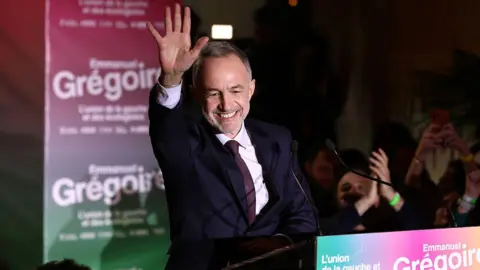
Emmanuel Grégoire’s victory in Paris aligns with polling predictions and reinforces the city’s leftist leanings. His predecessor, Anne Hidalgo, focused on anti-car policies enjoyed by the public.
Right-wing candidate Rachida Dati faced challenges during her campaign, which may have influenced voter decisions against her in the election.
The far-right National Rally (RN) made strides in small towns but could not secure key urban mayoralties, demonstrating weaknesses despite broader popularity in pre-election opinions.
Mainstream parties, however, experienced a surge in victories, giving them renewed optimism for the presidential elections amidst growing concerns regarding the potential for extremist candidates in a future run-off.