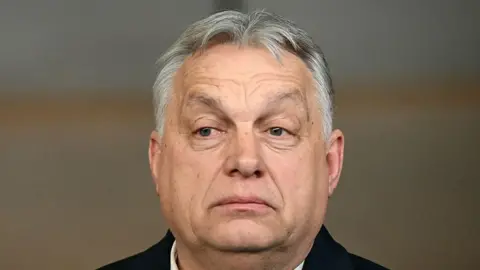
European Union leaders have accused Hungary's Prime Minister Viktor Orbán of disloyalty and blackmail after he blocked a €90bn (£77bn) loan for Ukraine.
No oil = no money, Orbán stated in a post on X following a summit in Brussels where he refused to lift his veto, pointing to a conflict over a damaged pipeline that carries Russian oil to Hungary.
German Chancellor Friedrich Merz labeled Orbán's actions a gross act of disloyalty, while European Council head António Costa characterized them as blackmail.
Since Russia's invasion of Ukraine in 2022, Orbán has maintained strong ties with the Kremlin and adopted a hostile stance toward Ukraine, now a key political issue as elections approach on April 12.
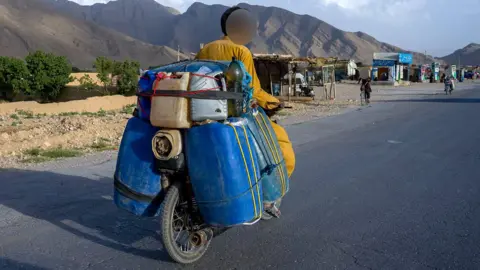
Hungary relies heavily on Russian energy, and Orbán has accused Ukraine of hampering energy supplies by neglecting to repair a Soviet-era pipeline called Druzhba.
Ukraine claims the pipeline was damaged in January due to Russian airstrikes, and repairs will take weeks. However, restoring the oil flow is seen as equivalent to lifting sanctions on Moscow.
While the pipeline remains inoperative, Orbán has blocked EU funds to Ukraine, despite having initially approved the measure in a prior meeting.
The EU leaders' assembly on Thursday resulted in considerable backlash against Orbán's actions, with many expressing barely concealed anger.
Germany's Merz remarked that long-standing members of the European Council were profoundly upset by the events. He stated, This is a gross act of disloyalty within the European Union, insisting it would leave a lasting impact.
French President Emmanuel Macron called the outcome of the summit unprecedented, emphasizing the need for prompt implementation of the loan. Council President Costa condemned Hungary's behavior as entirely unacceptable, asserting that no one can hold European institutions hostage.
Notably, Orbán remained steadfast after the meeting, asserting, We have the right to say 'no' to the Ukrainian war loan. As long as @ZelenskyyUa does not lift the oil blockade, they will not receive any money from Brussels.
Slovakia's Prime Minister Robert Fico, who is allied with Russia, also abstained from endorsing the summit's agreement to release funds to Ukraine, contributing to the deadlock, which requires unanimity among member states.
European Commission President Ursula Von der Leyen vowed the €90 billion loan would be delivered eventually, while Macron stressed that there would be no alternative to securing the funds.
Earlier in the meeting, Ukrainian President Volodymyr Zelensky had urged EU leaders to facilitate the release of their agreed financial support, emphasizing its critical role in safeguarding lives amid ongoing conflict.
Despite sustained efforts, Orbán has repeatedly stalled EU aid for Ukraine and initiatives aimed at sanctioning Russia. As elections loom, his party is currently trailing in the polls against primary opponents.