The European Union's top court has ruled that Hungarian anti-LGBTQ laws violate EU rules and infringe its values of equality and minority rights.
The laws were introduced by Viktor Orbán's government in 2021, banning the promotion of homosexuality or gender change to those under 18, under the pretext of protecting children.
The European Court of Justice (ECJ) determined that the reforms breached EU rules on numerous levels, notably violating the foundational values encapsulated in Article 2 of the EU Treaty—marking an unprecedented legal finding.
This crucial ruling comes just nine days after Hungarians voted to end Orbán's 16-year era of continuous rule.
The ECJ's verdict underscored that the Hungarian law violates rights such as the prohibition of discrimination based on sex and sexual orientation, as well as freedoms pertaining to private life and expression.
Furthermore, the court found that the legislation stigmatized and marginalized transgender individuals and those who do not identify as heterosexual, equating them unjustly with individuals convicted of paedophilia.
The laws were deemed fundamentally contradictory to the EU's principles, which promote a pluralistic society.
John Morijn, a scholar in law and politics at the University of Groningen, described the ruling as historic in its affirmation that the rights of any societal group cannot be compromised.
Orbán's Fidesz party passed this legislation using a supermajority in parliament. The laws also imposed a ban on public events, including Budapest’s Pride march, which went ahead despite this prohibition, attracting legal actions against Mayor Gergely Karácsony.
The European Commission indicated that it would raise the issue with Hungary's new government. Spokeswoman Paula Pinho emphasized the importance of compliance with the ruling for resolving future relations.
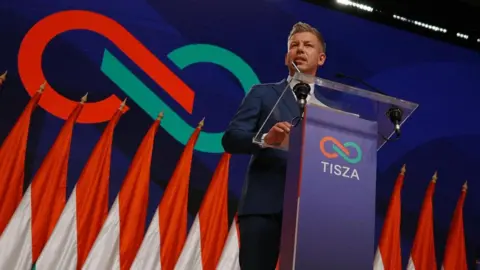
Péter Magyar, the leader of the political party that defeated Orbán, expressed his vision of a Hungary free from stigmatization based on differing perspectives and affections.
His Tisza party, now holding a two-thirds parliamentary majority, plans to adopt a much more pro-European stance, likely reversing anti-LGBTQ legislation and unlocking vital EU funds that had been withheld due to rule of law concerns.
Katja Štefanec Gärtner from LGBTQ rights group Ilga-Europe remarked that there is now no justification for delaying the repeal of Hungary's controversial law.
Professor Morijn noted that this ruling might influence future actions of the European Commission against any EU member state that violates similar rules, emphasizing the importance of upholding both the letter and spirit of EU law.