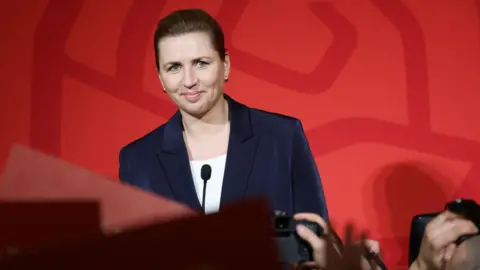
Denmark's Prime Minister Mette Frederiksen has faced a significant electoral setback in the recent general election, with her Social Democrats winning only 21.9% of the votes—a stark reduction that marks the party's worst performance since 1903. Although her party secured the largest number of seats, it fell shy of the 90 needed to form a majority coalition.
Frederiksen, who has been in power since 2019, addressed her supporters by expressing her disappointment with the vote count but also insisted on the party's enduring popularity among the Danish populace, stating, There is nothing today that can make me sad that the Social Democrats have once again become the Danes' absolute favourite political party.
The electoral landscape in Denmark has shifted dramatically, with the Liberal party Venstre, normally a strong contender, also experiencing its worst outcome in decades, garnering just 10.1% of the vote. The results have left both the left-wing 'red bloc' and the right-wing 'blue bloc' falling short of a governing majority, leading to complex coalition negotiations that are expected to take time.
Despite the challenges, Frederiksen reaffirmed her commitment to leading Denmark as Prime Minister, saying, I have been responsible for this wonderful country for almost 7 years. I am still ready to take on responsibility as Denmark's prime minister. As discussions unfold, all eyes are on the Moderates and their leader Lars Løkke Rasmussen, who may play a pivotal role in shaping the next government.
The election comes on the heels of significant national concerns, including the rising cost of living, economic stability, and climate issues, underscoring the complexity of the electorate’s priorities beyond geopolitical narratives.