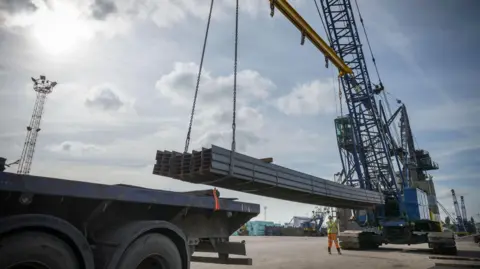
Iran's two largest steel plants have been shut down due to multiple rounds of US-Israeli air strikes, the companies operating them say. 'Our initial estimate is that restarting these units will take at least six months and up to one year,' Mehran Pakbin, deputy head of operations at the Khuzestan Steel Company in south-western Iran, was quoted as saying by Iranian media. Mobarakeh Steel Company stated that its production lines in the center of the country had completely shut down following the high volume of attacks. The strikes, which Israeli media and Iran's foreign minister said were first launched by Israel in coordination with the US last Friday, could cause major damage to Iran's economy.
Iran is the 10th largest producer of steel globally, utilizing the material for local construction and manufacturing while also exporting it. A halt in production could greatly disrupt supply chains and businesses across the country, compounding the effects of extensive Western sanctions. The BBC has reached out to the Israel Defense Forces (IDF) and the US military's Central Command (Centcom) for comment. Iranian Foreign Minister Abbas Araghchi reported that Israel targeted Iran's steel factories, a power plant, and civilian nuclear sites. Reports indicate that these strikes could result in billions of dollars in damages to Iran's economy, with connections to the Islamic Revolution Guard Corps (IRGC).
In response, the IRGC has targeted US-linked steel and aluminum facilities in Gulf states. Recently, missile attacks from Iran toward Israel have also been reported, escalating tensions in the region. This situation comes amid a wider campaign of attacks that include health facilities and infrastructure, raising concerns about a more extensive conflict with potential humanitarian implications. As international focus sharpens on the issue, Iranian internet access remains severely restricted, hampering the dissemination of information regarding the ongoing strikes and their impacts.
Iran is the 10th largest producer of steel globally, utilizing the material for local construction and manufacturing while also exporting it. A halt in production could greatly disrupt supply chains and businesses across the country, compounding the effects of extensive Western sanctions. The BBC has reached out to the Israel Defense Forces (IDF) and the US military's Central Command (Centcom) for comment. Iranian Foreign Minister Abbas Araghchi reported that Israel targeted Iran's steel factories, a power plant, and civilian nuclear sites. Reports indicate that these strikes could result in billions of dollars in damages to Iran's economy, with connections to the Islamic Revolution Guard Corps (IRGC).
In response, the IRGC has targeted US-linked steel and aluminum facilities in Gulf states. Recently, missile attacks from Iran toward Israel have also been reported, escalating tensions in the region. This situation comes amid a wider campaign of attacks that include health facilities and infrastructure, raising concerns about a more extensive conflict with potential humanitarian implications. As international focus sharpens on the issue, Iranian internet access remains severely restricted, hampering the dissemination of information regarding the ongoing strikes and their impacts.