The uncovering of iron artifacts at various sites like Adichchanallur and Mayiladumparai ignites discussions surrounding the state’s pivotal role in early civilization and global trade. Archaeologist Parth R Chauhan cautions against jumping to sweeping conclusions, as he asserts that the rise of iron technology likely occurred concurrently in multiple locations globally. While the Tamil Nadu findings are expected to challenge existing paradigms, confirming their broad implications will require further validation.
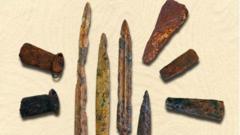
Among the notable discoveries is an iron sword dating to the 13th to 15th centuries BCE made from advanced high-carbon steel, a significant finding according to historian Osmund Bopearachchi. This points towards an advanced understanding of metallurgy in Tamil Nadu much earlier than previously acknowledged. Other artifacts include various tools and weapons, showcasing an industrious iron-making community.
Experts emphasize that these discoveries are not isolated; over 27 sites across India have previously revealed evidence of early iron usage, broadening the narrative that iron technology possibly evolved independently across various regions. Nevertheless, the Tamil Nadu finds hold the potential to reshape discussions around the timeline and nature of the Iron Age and its technological advancements within the Indian subcontinent.
The significant implications of these excavations speak to the sophistication of ancient civilization in the area, as well as the continuous need for comprehensive archaeological research across India. Leading archaeologist Katragadda Paddayya suggests that this moment marks just the beginning of a deeper exploration into the origins of iron technology, advocating for future investigations to trace the development and production processes of iron further back in history. Continuing studies are essential to fully comprehend the complex legacy of iron in ancient Indian society.
As the archaeological community continues to investigate, the emerging narrative highlights Tamil Nadu's crucial role in the ancient world’s metallurgical advancements, hinting at a rich tapestry of history yet to be thoroughly explored.
Among the notable discoveries is an iron sword dating to the 13th to 15th centuries BCE made from advanced high-carbon steel, a significant finding according to historian Osmund Bopearachchi. This points towards an advanced understanding of metallurgy in Tamil Nadu much earlier than previously acknowledged. Other artifacts include various tools and weapons, showcasing an industrious iron-making community.
Experts emphasize that these discoveries are not isolated; over 27 sites across India have previously revealed evidence of early iron usage, broadening the narrative that iron technology possibly evolved independently across various regions. Nevertheless, the Tamil Nadu finds hold the potential to reshape discussions around the timeline and nature of the Iron Age and its technological advancements within the Indian subcontinent.
The significant implications of these excavations speak to the sophistication of ancient civilization in the area, as well as the continuous need for comprehensive archaeological research across India. Leading archaeologist Katragadda Paddayya suggests that this moment marks just the beginning of a deeper exploration into the origins of iron technology, advocating for future investigations to trace the development and production processes of iron further back in history. Continuing studies are essential to fully comprehend the complex legacy of iron in ancient Indian society.
As the archaeological community continues to investigate, the emerging narrative highlights Tamil Nadu's crucial role in the ancient world’s metallurgical advancements, hinting at a rich tapestry of history yet to be thoroughly explored.