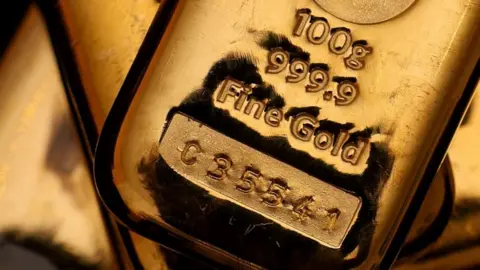
The price of gold has risen above $5,000 (£3,659) an ounce for the first time ever, extending a historic rally that saw the precious metal jump by more than 60% in 2025.
This surge coincides with escalating tensions between the US and NATO regarding Greenland, compounding worries about financial and geopolitical stability. Concerns regarding US President Donald Trump's trade strategies have further added to this uncertainty, particularly after his recent threat of a 100% tariff on Canadian goods pending a trade deal with China.
Gold and other precious metals are often viewed as 'safe-haven' assets by investors during turbulent times. In addition to gold's newfound heights, silver has also seen a remarkable surge, surpassing $100 an ounce for the first time, following its rise of nearly 150% last year.
The demand for precious metals is being driven by various factors, including record inflation rates, a weakened US dollar, central bank acquisitions globally, and expectations that the Federal Reserve will cut interest rates further this year.
Ongoing geopolitical conflicts, including the wars in Ukraine and Gaza, alongside US actions against Venezuela, have bolstered gold prices. One of gold's lasting appeals stems from its relative scarcity; only around 216,265 tonnes have ever been extracted, with reports indicating that up to 64,000 tonnes remain buried in the earth.
According to Nicholas Frappell, global head of institutional markets at ABC Refinery, owning gold is advantageous as it is not dependent on someone else's debt, unlike bonds or equities, serving as a valuable diversifier in turbulent financial times.
'People go to gold'
The rise has been unprecedented, with gold experiencing its highest annual increase since 1979 as investors flocked to the precious metal. Market fears concerning Trump’s tariffs and overvalued AI stocks contributed to consistent record highs throughout the past year.
Experts like Nikos Kavlis from Metals Focus suggest that ongoing policy uncertainties within the US are a significant contributing factor to this surge. With expected cuts to interest rates, gold is anticipated to maintain its value compared to traditional investments like bonds that offer declining returns.
This demand isn't merely speculative; last year, several central banks added hundreds of tons of gold to their reserves, demonstrating a strategic pivot away from the US dollar. As the year begins, gold continues to climb, though Frappell cautions that market dynamics could shift based on emerging news that might not favor the precious metal's current trajectory.
Additionally, gold plays a vital role in various cultures, commonly purchased during festive occasions or gifted during significant celebrations. In India, for example, the festival of Diwali is seen as an auspicious time to procure gold, while neighboring China remains the largest consumer market for the metal, perceived as a symbol of good fortune.
As we approach the Chinese New Year, there is an observable seasonal rise in demand — a testament to the cultural significance and financial allure that gold continues to hold.