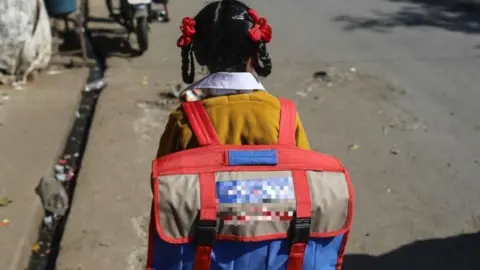
Pooja* was 16 years old when she was accused of murdering her mother. The teenager, who lived with her alcoholic stepfather in a poor neighbourhood in the northern Indian state of Uttar Pradesh, was arrested in 2018 and sent to jail.
Her lawyer told the police that Pooja was a minor. According to Indian law, she should have been produced before a Juvenile Justice Board (JJB) within 24 hours of her arrest. But this was not done. Instead of appearing before a JJB, Pooja was lodged in a prison for six years while her case was heard in an adult court. In 2024, her case was finally transferred to a JJB, which found she was indeed a minor at the time of the alleged crime, and she was released on time served.
Pooja's case represents thousands of children let down by a juvenile justice system that is intended to protect and rehabilitate minors, yet often fails to do so. Nearly four decades after the first juvenile justice law was enacted in India, experts highlight serious implementation challenges, with many minors deprived of legal rights and opportunities for reform.
The India Justice Report indicates that as of 2023, more than half of the cases before the 362 JJBs were pending hearing, revealing a significant backlog and a lack of oversight. Compounding this issue, many JJBs are not fully staffed, which undermines their effectiveness.
The report underscores the fragility of India's juvenile justice system, where children from disadvantaged backgrounds are subjected to further victimization instead of receiving the guidance and rehabilitation they need. Experts stress the importance of understanding these children's realities to ensure that they are afforded a genuine chance for redemption.
While some organizations like Echo show that success stories are possible with proper support and funding, the overarching view remains bleak. Many facilities continue to be inadequate, leading to a cycle of revictimization and neglect.
As Fr. Sebastian from Echo states, 'Every child deserves a second chance,' reminding us of the critical role society plays in providing these young individuals with a pathway to redemption and successful reintegration into their communities.
*Names have been changed as Indian law prohibits the disclosure of a juvenile offender's identity.