The US has launched an effort to form a trade zone for critical minerals that are key to making everything from smartphones to weapons, as it seeks to break China's dominance of the industry.
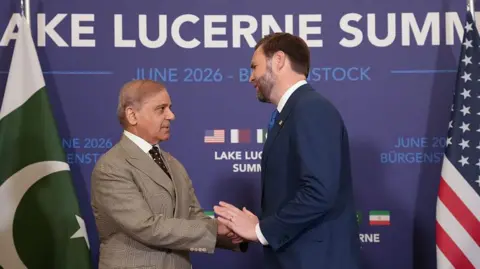
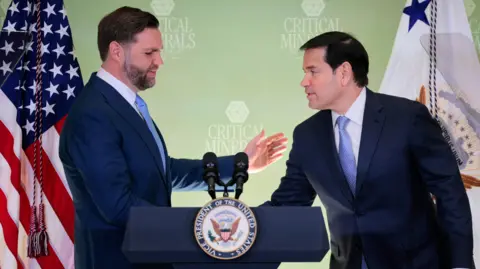
On Wednesday, the State Department hosted the first Critical Minerals Ministerial event, attended by countries and organizations including the UK, European Union, Japan, India, South Korea, Australia, and the Democratic Republic of Congo.
Delegates discussed the availability and access to minerals crucial for manufacturing items like computer chips and electric vehicle batteries. The mining and processing of critical minerals, which include rare earths, is largely dominated by China.
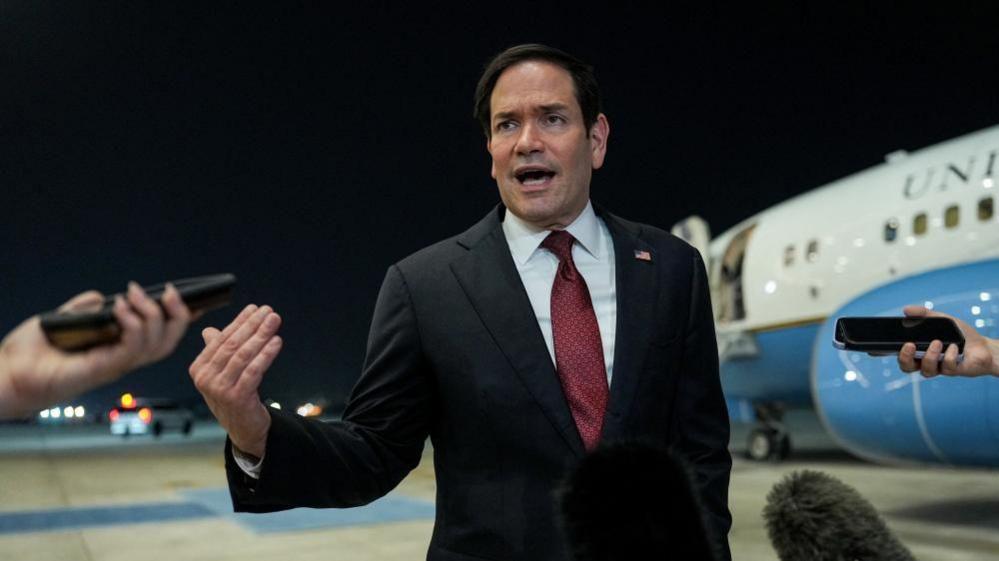
In remarks released by the US government, Vice President JD Vance and Secretary of State Marco Rubio did not mention China by name. Instead, Vance referred to the 'foreign supply' of these minerals flooding global markets, making it difficult for other countries with mineral deposits to secure the financing needed for production.
The US plans to utilize tariffs to prevent critical mineral prices from dropping too low, a move seen as essential to encourage investment. David Copley, a special assistant to former President Donald Trump, highlighted plans to 'deploy hundreds of billions of capital into the mining sector' to kickstart new projects.
Investments have already been made in companies like MP Materials and Lithium Americas, which are focused on rare earth materials and battery production.
Additionally, US Trade Representative Jamieson Greer indicated that the US, Japan, and the European Commission are developing 'coordinated trade policies and mechanisms' to collectively address concerns over access to essential minerals.
This meeting is part of a broader strategy to counter China's leverage in international trade discussions. Prior to the event, a Chinese Foreign Ministry spokesperson called for adherence to market principles and international trade rules.
The US has also announced a critical mineral reserve named 'Project Vault,' valued at nearly $12 billion, reflecting a significant commitment to enhancing domestic mineral availability.
Industry figures welcomed this initiative, noting the importance of proactive measures to secure the supply of various minerals and rare earths necessary for technological advancement and national security. The event coincided with a call between Trump and Chinese President Xi Jinping, described as 'very positive.' China has been tightening its grip over rare earth exports, raising concerns about US dependency on these imports.
On Wednesday, the State Department hosted the first Critical Minerals Ministerial event, attended by countries and organizations including the UK, European Union, Japan, India, South Korea, Australia, and the Democratic Republic of Congo.
Delegates discussed the availability and access to minerals crucial for manufacturing items like computer chips and electric vehicle batteries. The mining and processing of critical minerals, which include rare earths, is largely dominated by China.
In remarks released by the US government, Vice President JD Vance and Secretary of State Marco Rubio did not mention China by name. Instead, Vance referred to the 'foreign supply' of these minerals flooding global markets, making it difficult for other countries with mineral deposits to secure the financing needed for production.
The US plans to utilize tariffs to prevent critical mineral prices from dropping too low, a move seen as essential to encourage investment. David Copley, a special assistant to former President Donald Trump, highlighted plans to 'deploy hundreds of billions of capital into the mining sector' to kickstart new projects.
Investments have already been made in companies like MP Materials and Lithium Americas, which are focused on rare earth materials and battery production.
Additionally, US Trade Representative Jamieson Greer indicated that the US, Japan, and the European Commission are developing 'coordinated trade policies and mechanisms' to collectively address concerns over access to essential minerals.
This meeting is part of a broader strategy to counter China's leverage in international trade discussions. Prior to the event, a Chinese Foreign Ministry spokesperson called for adherence to market principles and international trade rules.
The US has also announced a critical mineral reserve named 'Project Vault,' valued at nearly $12 billion, reflecting a significant commitment to enhancing domestic mineral availability.
Industry figures welcomed this initiative, noting the importance of proactive measures to secure the supply of various minerals and rare earths necessary for technological advancement and national security. The event coincided with a call between Trump and Chinese President Xi Jinping, described as 'very positive.' China has been tightening its grip over rare earth exports, raising concerns about US dependency on these imports.