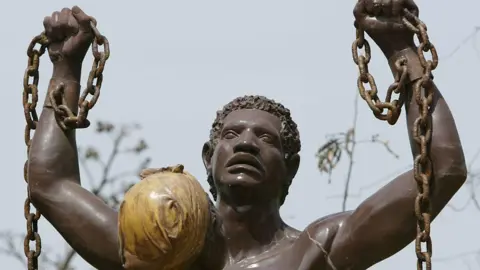
The United Nations General Assembly this week overwhelmingly backed a resolution declaring the transatlantic slave trade 'the gravest crime against humanity'. Welcoming the vote, UN Secretary-General Antonio Guterres stated that the wealth of many Western nations was 'built on stolen lives and stolen labour', noting the 'barbaric punishments' that maintained control over enslaved individuals. He emphasized that it was not merely forced labour but a systematic machinery of exploitation and dehumanization.
Analysts believe this resolution, supported by numerous African and Caribbean countries, marks a critical political step, despite its non-binding nature. As Dr. Erieka Bennett from the Diaspora African Forum expressed, it holds personal significance for descendants of slaves, symbolizing acknowledgment of their ancestors' suffering.
Historically, countries impacted by slavery have long sought reparations, an issue gaining renewed focus as businesses and nations begin to acknowledge their roles in the slave trade.
The resolution was adopted with 123 votes in favor, while the UK, EU countries, and the United States abstained or opposed it, showcasing ongoing divisions on this sensitive topic. Discussions about reparations are likely to intensify, with calls for tangible action to address the historical ramifications of slavery.
Analysts believe this resolution, supported by numerous African and Caribbean countries, marks a critical political step, despite its non-binding nature. As Dr. Erieka Bennett from the Diaspora African Forum expressed, it holds personal significance for descendants of slaves, symbolizing acknowledgment of their ancestors' suffering.
Historically, countries impacted by slavery have long sought reparations, an issue gaining renewed focus as businesses and nations begin to acknowledge their roles in the slave trade.
The resolution was adopted with 123 votes in favor, while the UK, EU countries, and the United States abstained or opposed it, showcasing ongoing divisions on this sensitive topic. Discussions about reparations are likely to intensify, with calls for tangible action to address the historical ramifications of slavery.