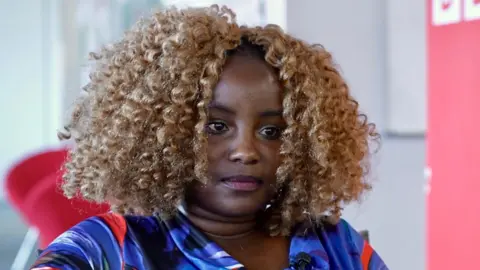
On Valentine's Day, Joy Kalekye, a 19-year-old student in Nairobi, received alarming news from a worried friend urging her to check social media. To her shock, a video had surfaced showcasing her interacting with a man who approached her on the street, saying, 'Hi, I like how you look.' Unbeknownst to her at that moment, she was being filmed. This incident is part of a troubling global trend where men discreetly record interactions with women without their consent, often resulting in the videos being shared widely on social media and racking up millions of views.
In these videos, men engage in various behaviors such as touching women’s hair and requesting their phone numbers, further exacerbating a culture of vulnerability and objectification. Many creators of such videos monetize their content, capitalizing off women's discomfort and violation.
Kalekye's experience, shared during an interview with the BBC, reflects the broader societal issue of victim-blaming, as many online commentators and even local politicians have directed scorn towards the women featured in these videos rather than the men who exploit them. Activists, including Brenda Yambo from the Federation of Women Lawyers in Kenya, are calling for accountability, highlighting the harmful stereotypes that are perpetuated through these online platforms.
'It's like being a celebrity, but not in such a good way,' Kalekye remarked, acknowledging the backlash she faced as a result of the viral video. Instead of focusing on the men's misuse of technology for exploitation, society scrutinizes the women’s choices and appearances, reinforcing damaging views that hinder victims from speaking out.
Legal measures are being considered in both Kenya and Ghana to address the criminality of non-consensual filming, with calls for the arrest of those responsible. However, the situation remains dire, with activists stressing the need for a shift in societal attitudes that hold perpetrators accountable rather than vilifying victims.
Overall, the rising trend of filming women without their consent and sharing these videos online poses significant threats to women's safety and dignity, inspiring a renewed focus on the need for robust legal and cultural action to protect individuals from such exploitative behavior.
In these videos, men engage in various behaviors such as touching women’s hair and requesting their phone numbers, further exacerbating a culture of vulnerability and objectification. Many creators of such videos monetize their content, capitalizing off women's discomfort and violation.
Kalekye's experience, shared during an interview with the BBC, reflects the broader societal issue of victim-blaming, as many online commentators and even local politicians have directed scorn towards the women featured in these videos rather than the men who exploit them. Activists, including Brenda Yambo from the Federation of Women Lawyers in Kenya, are calling for accountability, highlighting the harmful stereotypes that are perpetuated through these online platforms.
'It's like being a celebrity, but not in such a good way,' Kalekye remarked, acknowledging the backlash she faced as a result of the viral video. Instead of focusing on the men's misuse of technology for exploitation, society scrutinizes the women’s choices and appearances, reinforcing damaging views that hinder victims from speaking out.
Legal measures are being considered in both Kenya and Ghana to address the criminality of non-consensual filming, with calls for the arrest of those responsible. However, the situation remains dire, with activists stressing the need for a shift in societal attitudes that hold perpetrators accountable rather than vilifying victims.
Overall, the rising trend of filming women without their consent and sharing these videos online poses significant threats to women's safety and dignity, inspiring a renewed focus on the need for robust legal and cultural action to protect individuals from such exploitative behavior.