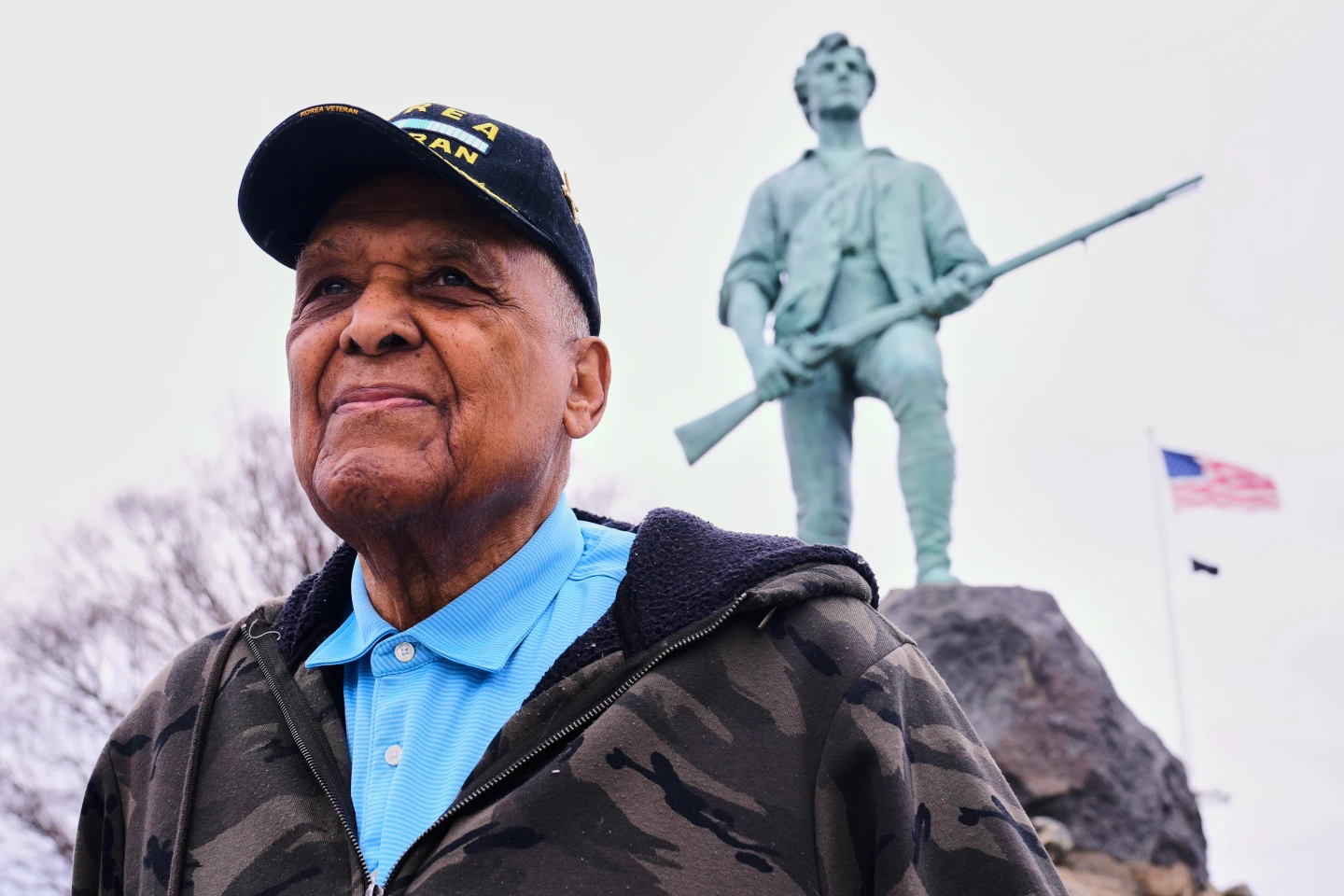
As America gears up for its 250th anniversary, the crucial contributions of Black and Indigenous soldiers during the American Revolution are receiving the recognition they have long been denied. Members of the Lexington Minutemen, a Revolutionary War reenactor group, are celebrating the anniversary of the Battle of Lexington while honoring figures like Prince Estabrook, who fought bravely alongside his white compatriots. Charlie Price, a 95-year-old Black Korean War veteran, reflects on the limited knowledge many have about revolutionary heroes of color, underscoring the importance of remembering their sacrifices.
New efforts aim to provide a more comprehensive understanding of the Revolution, moving beyond traditional narratives that emphasize white leaders like George Washington or Benjamin Franklin. Scholars argue that an accurate portrayal acknowledges the diverse contributions from soldiers of various backgrounds, thus expanding the story of America's fight for independence. This includes acknowledging the complex interplay of slavery and the desire for freedom among the nation's early defenders.
With initiatives like the “Patriots of Color” exhibit opening next week at American Ancestors in Boston, the lives of 26 historical figures—including Crispus Attucks, known for his role in the Boston Massacre, and Salem Poor, a formerly enslaved man who fought at Bunker Hill—are being highlighted. These educational programs are vital in affirming the role of every American in shaping their nation’s history.
In recounting Estabrook’s life, historical records indicate that he was born into slavery around 1740 but went on to serve distinguishedly during the Revolution. After the war, he was granted his freedom, lived in Lexington, and contributed to his community as a free man. Those who continue to reenact his story, like Price, strive to keep his memory and the memory of countless other patriots of color alive, ensuring that their contributions will not be forgotten in the narrative of American independence.
New efforts aim to provide a more comprehensive understanding of the Revolution, moving beyond traditional narratives that emphasize white leaders like George Washington or Benjamin Franklin. Scholars argue that an accurate portrayal acknowledges the diverse contributions from soldiers of various backgrounds, thus expanding the story of America's fight for independence. This includes acknowledging the complex interplay of slavery and the desire for freedom among the nation's early defenders.
With initiatives like the “Patriots of Color” exhibit opening next week at American Ancestors in Boston, the lives of 26 historical figures—including Crispus Attucks, known for his role in the Boston Massacre, and Salem Poor, a formerly enslaved man who fought at Bunker Hill—are being highlighted. These educational programs are vital in affirming the role of every American in shaping their nation’s history.
In recounting Estabrook’s life, historical records indicate that he was born into slavery around 1740 but went on to serve distinguishedly during the Revolution. After the war, he was granted his freedom, lived in Lexington, and contributed to his community as a free man. Those who continue to reenact his story, like Price, strive to keep his memory and the memory of countless other patriots of color alive, ensuring that their contributions will not be forgotten in the narrative of American independence.